Guest crit for Prof. Matthew Griffin studio at International Master Program in Dessau, Germany
"Like & Subscribe: On the significance of media platforms for planning and architecture
education",
for Collection Volume: Planning Miseducation: Relearning urbanism within, against, and beyond
the
university
Bachelor (3rd Semester) Design Studio in Winter Semester 24-25
Institute for Architecture-Technical University in Berlin at Chair for Urban Design &
Urbanisation
Panel Presentations for Reassembling Knowledge and Awakening Critical Reflection – Panel with
Jos
Boys & Forward Dance Company;
Co-organizers: Marta Fernández Guardado, Veljko Markovic, Klaus Platzgummer, Christian Haid,
Juliana
Canedo, Alex Groß, Julia Köpper, and Nicole Mroczek (Diversity & Equality)
Lambertseter Portalen
Collaboration with artist Ellinor Aurora Aasgaard
Selected for Oslo Architecture Triennale -Neighbourhood Index Platform
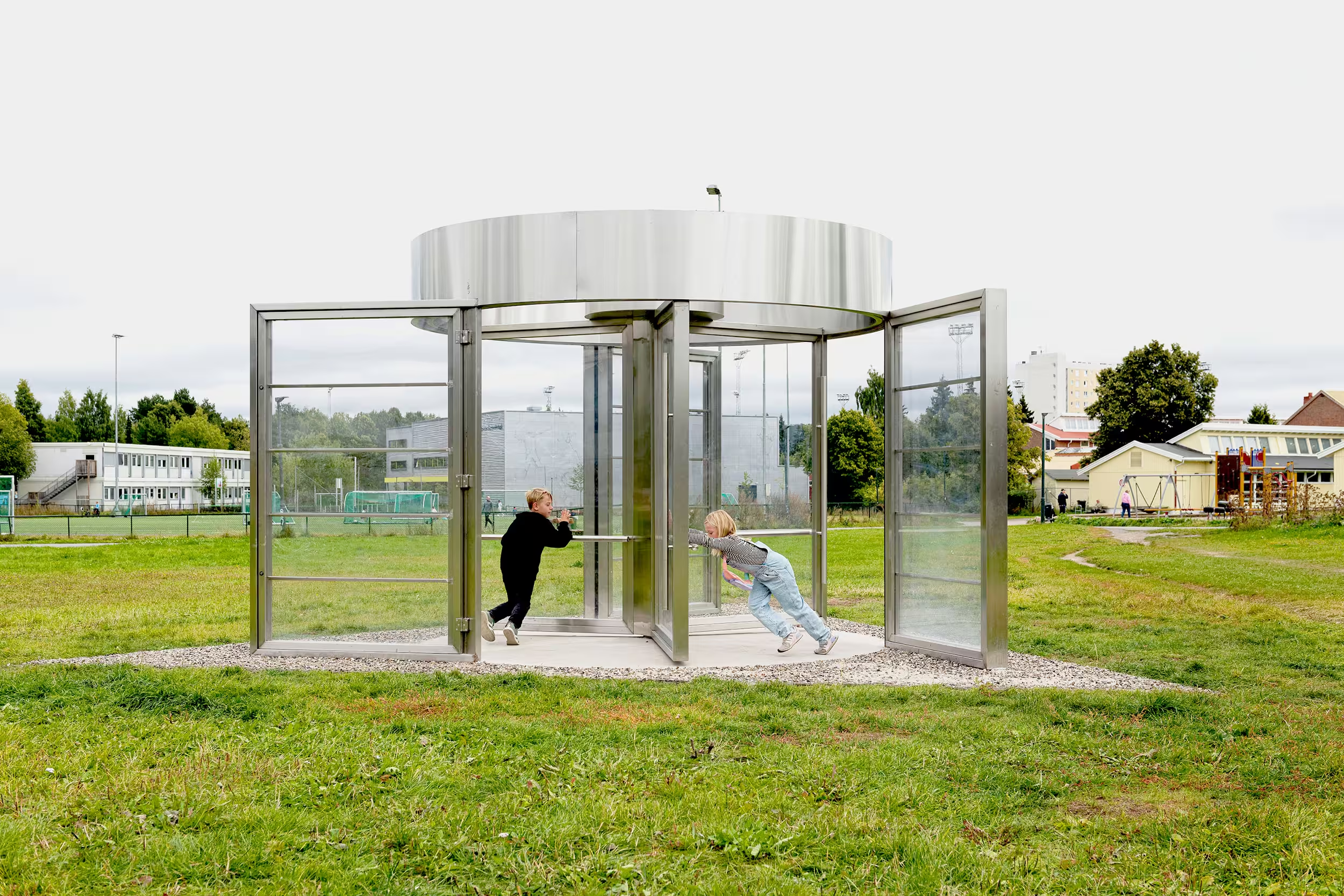
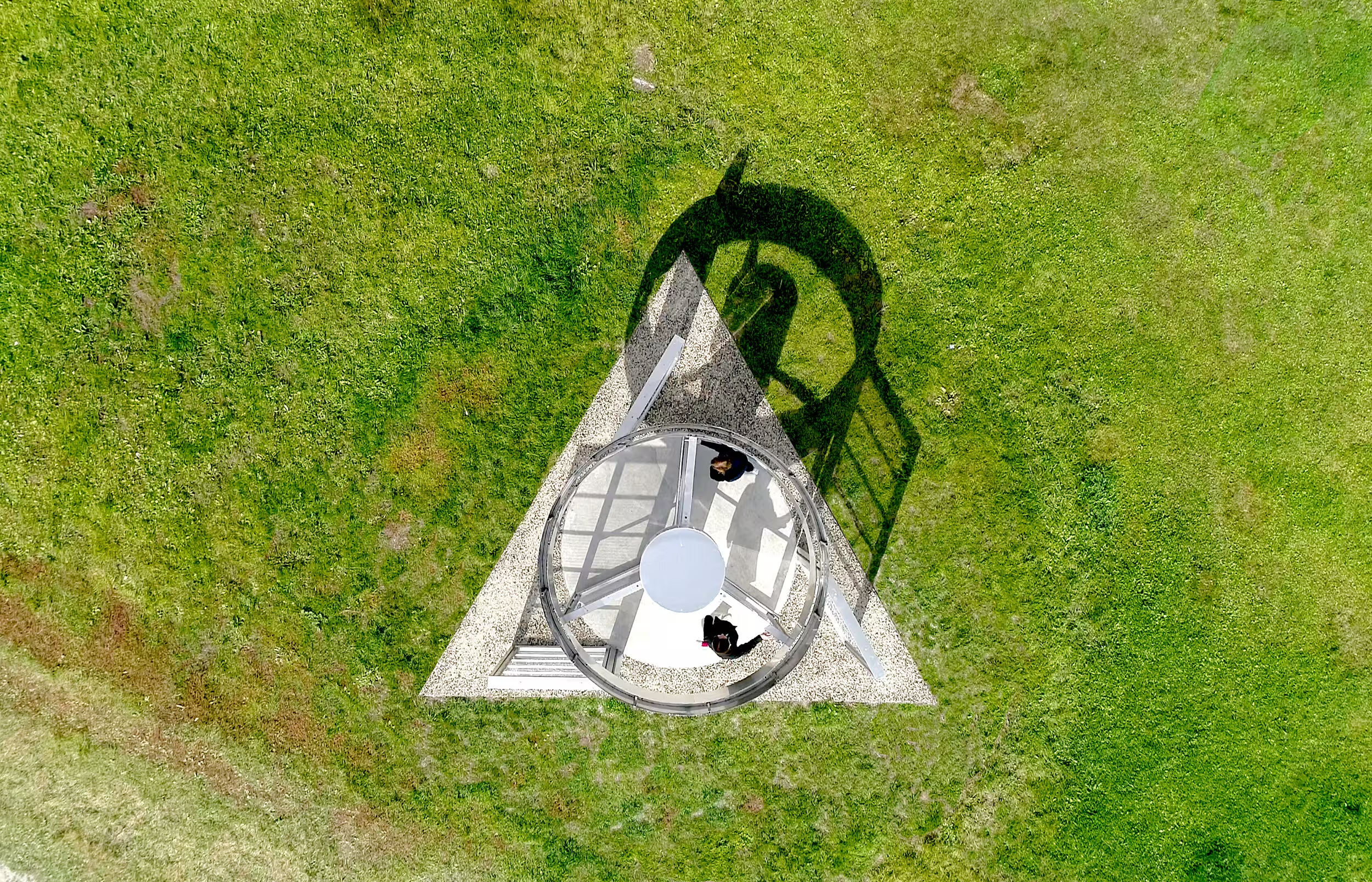
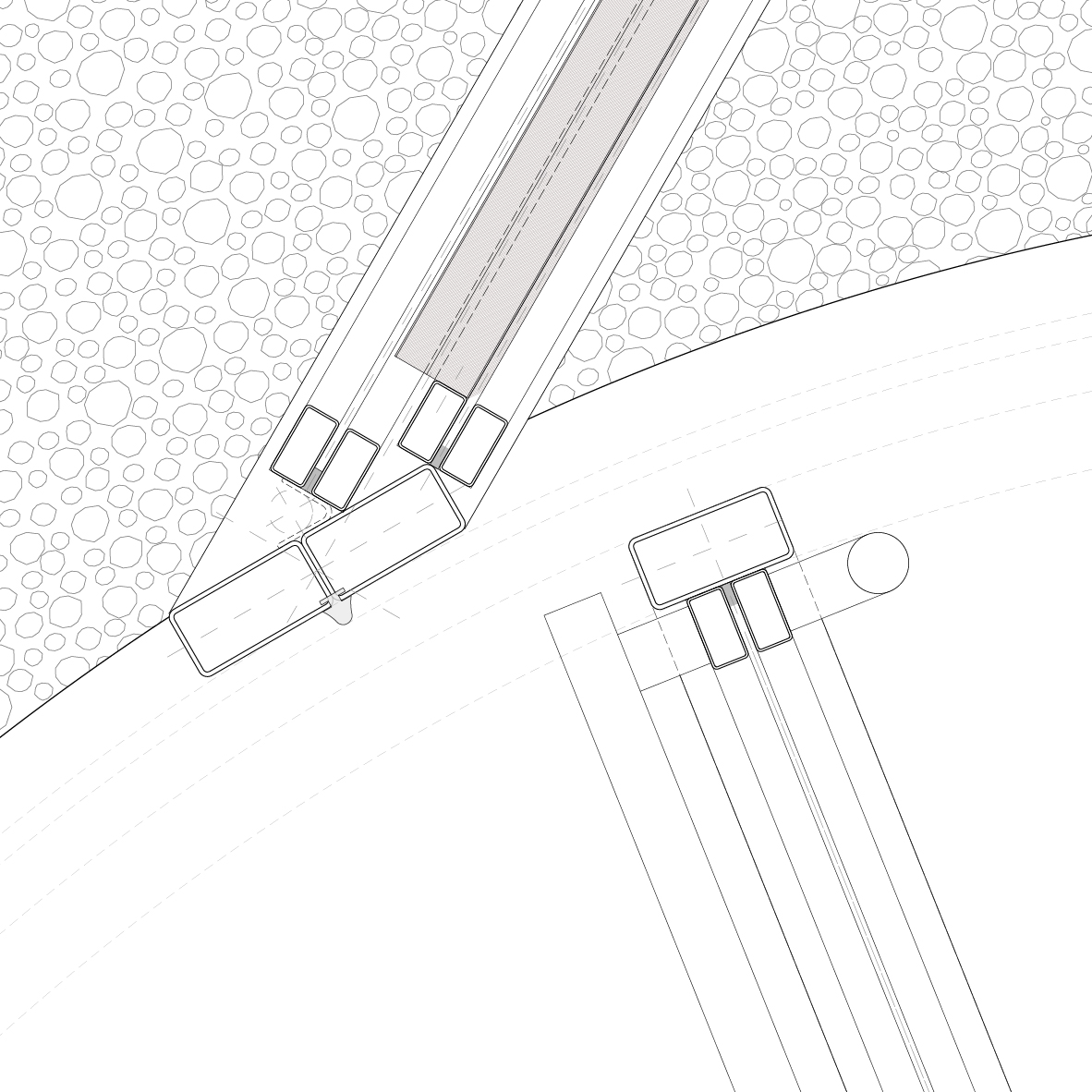
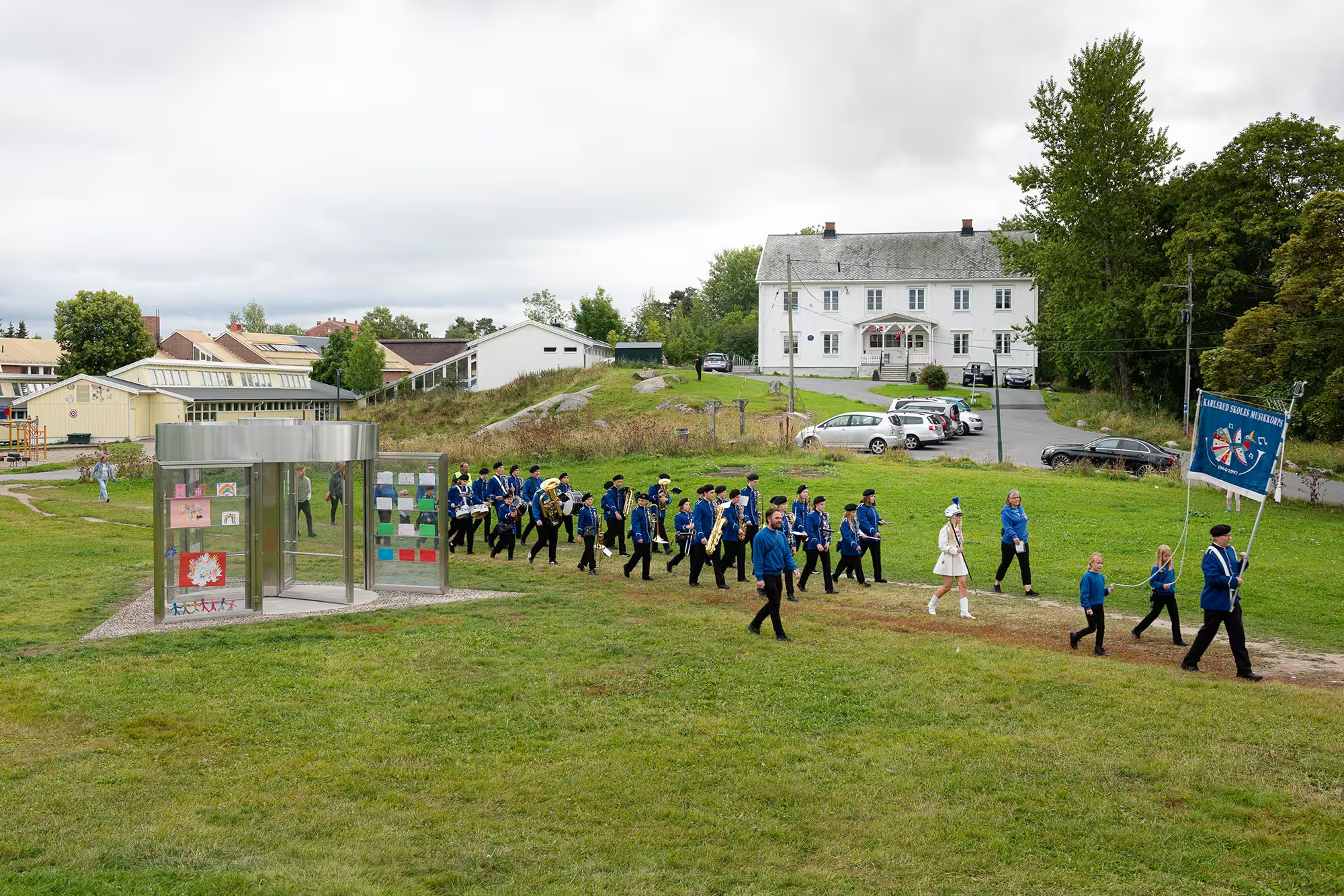
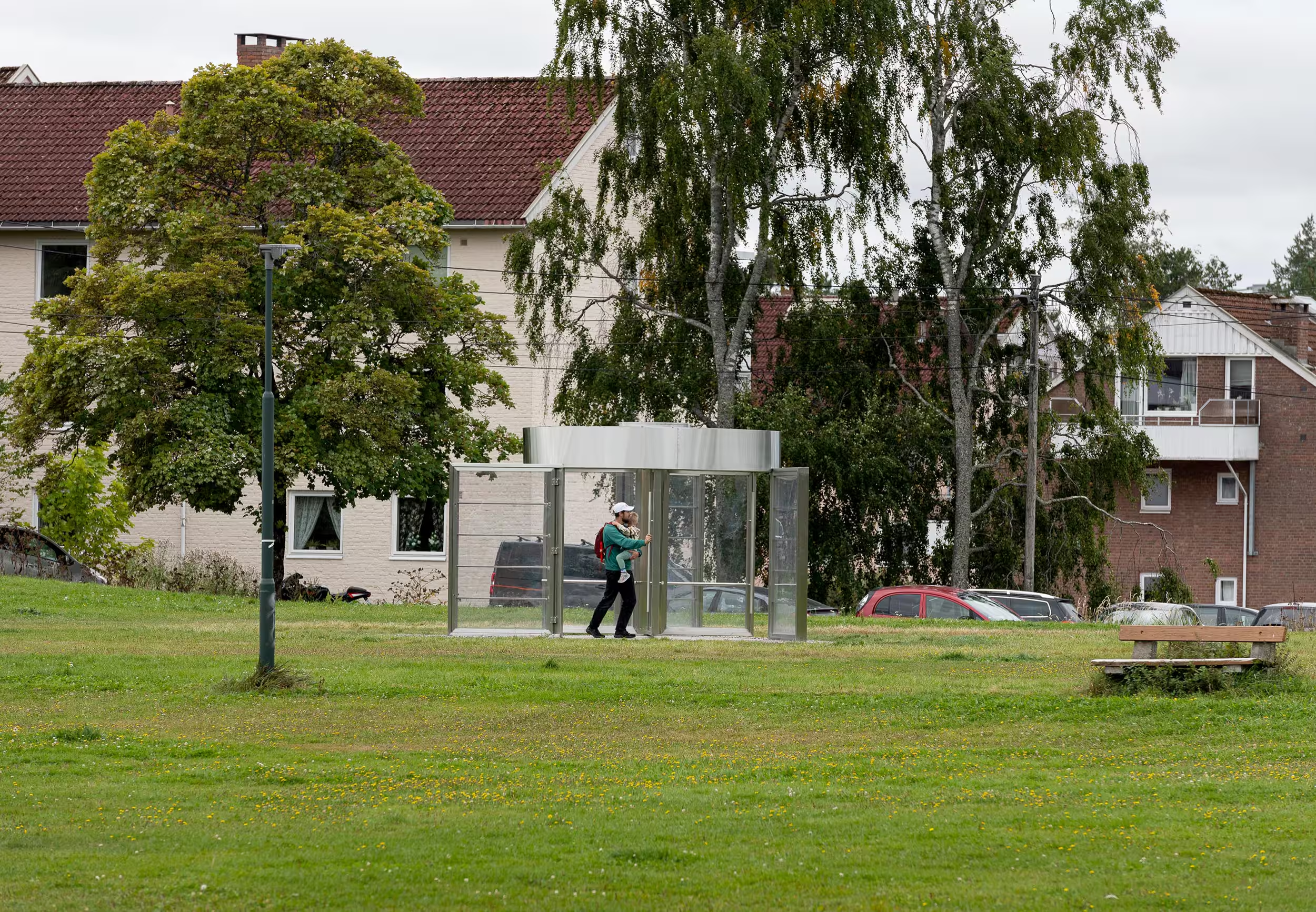
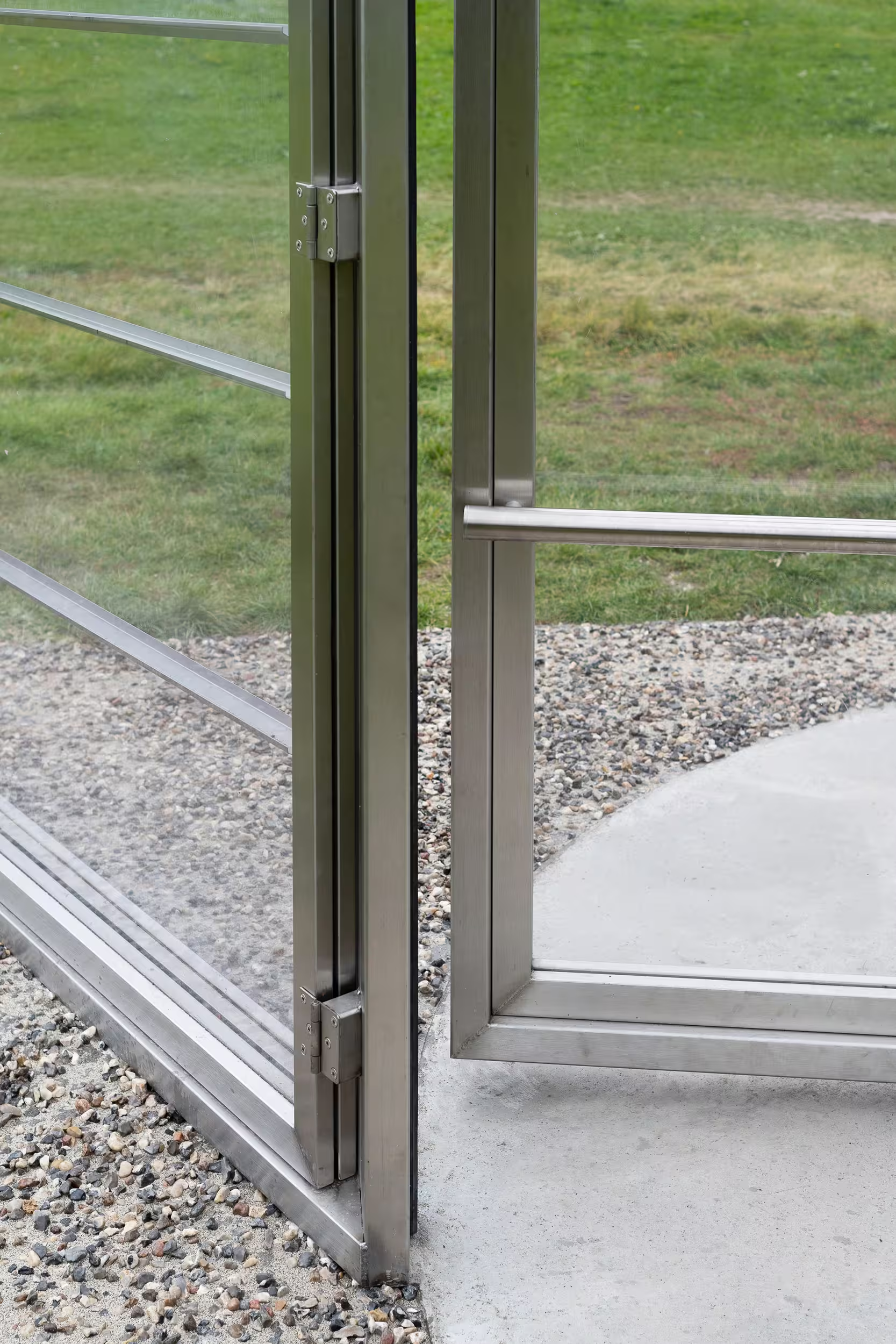
The project is the winning proposal of the Oslo Kommune open-call competition for artistic and architectural proposals, looking for a contribution to the green public surfaces. Lambertseter Park is located in one of the first modernist satellite neighborhoods in Oslo, built in the 1950s for the workers' community. In the spirit of the time, the park was designed as the central public space, surrounded by several public buildings serving the community, such as a kindergarten, high school, and library. Although these institutions were planned in close proximity, they have little to no exchange or interaction between the children and users of the facilities. As a result, the central space of the park has largely become a passageway where locals of different ages simply cross paths without meaningful interaction. Over time, the shopping mall (built later) became the de facto meeting point for the community, where encounters were shaped primarily around consumption.
The Lambertseter Portal proposal is situated at the crossroads of naturally formed pathways created by local residents - an intersection where daily park users continuously meet. The sculpture is conceived as a revolving door structure that both highlights and celebrates these everyday rituals of encounter. By creating a playful barrier, the door requires physical engagement, turning passing moments into potential interactions. At the same time, it interrupts the quickest route, using the pause itself as an opportunity for new social exchanges. Complementing the doors, the sculpture also features three display vitrines oriented toward the three public institutions. These vitrines are intended as a community announcement platform, sharing news and events from the library, kindergarten, and school. The sculpture was awarded at the 2022 Oslo Architecture Triennale, which was centered on the theme of neighborhoods.
A collectively owned artists studios
Working on the project with Deadline Architects from 2015-2018
Shortlisted to the Final Five for the prestigious European Union Prize for Contemporary
Architecture
– Mies van der Rohe Award
Blumengroßmarkt – Collaborative Development is an example of the city center of Berlin being redeveloped by architects. By testing new, integrated architectural models, these projects were initiated by engaged architects, local initiatives, and future inhabitants. The concepts for the new experimental public land sales procedure were developed to define a new approach to urban development: inclusive, participatory, mixed-use, and process-driven. Designing Legal Structures to Accommodate Architectural Potential: To make Frizz23 possible, we created a two-tiered ownership structure. The architecture expresses this complex ownership system – Einteilig, Dreiteilig, Kleinteilig (single-, triple-, multifaceted). These changes, aimed at locally integrated urban development, began when the concepts were selected from over 40 contenders in Berlin's experimental land sales procedure. Not the highest price, but the best ideas won.
These mixed-use projects combine commercial, social, residential, and cultural goals. Together, they expand Berlin's Baugruppen tradition to a larger scale of collaborative thinking and collaborative development. Actively Changing Legislation: Working as participants within the Initiative Stadt Neudenken, we helped structure Berlin's legislation for public land sales through a broad dialogue between civil society and government institutions. Developing References for Future Legislation: This Qualifizierende Verfahren precedent serves as a reference for adapting legislation to encourage dialogue-oriented design as a viable, cooperative alternative to conventional architectural competitions. The realized project was shortlisted among the top five for the prestigious European Mies van der Rohe Prize 2022.
Second phase for the New building for Kiel University of Applied Sciences
Collaboration with architect Moritz Maria Karl
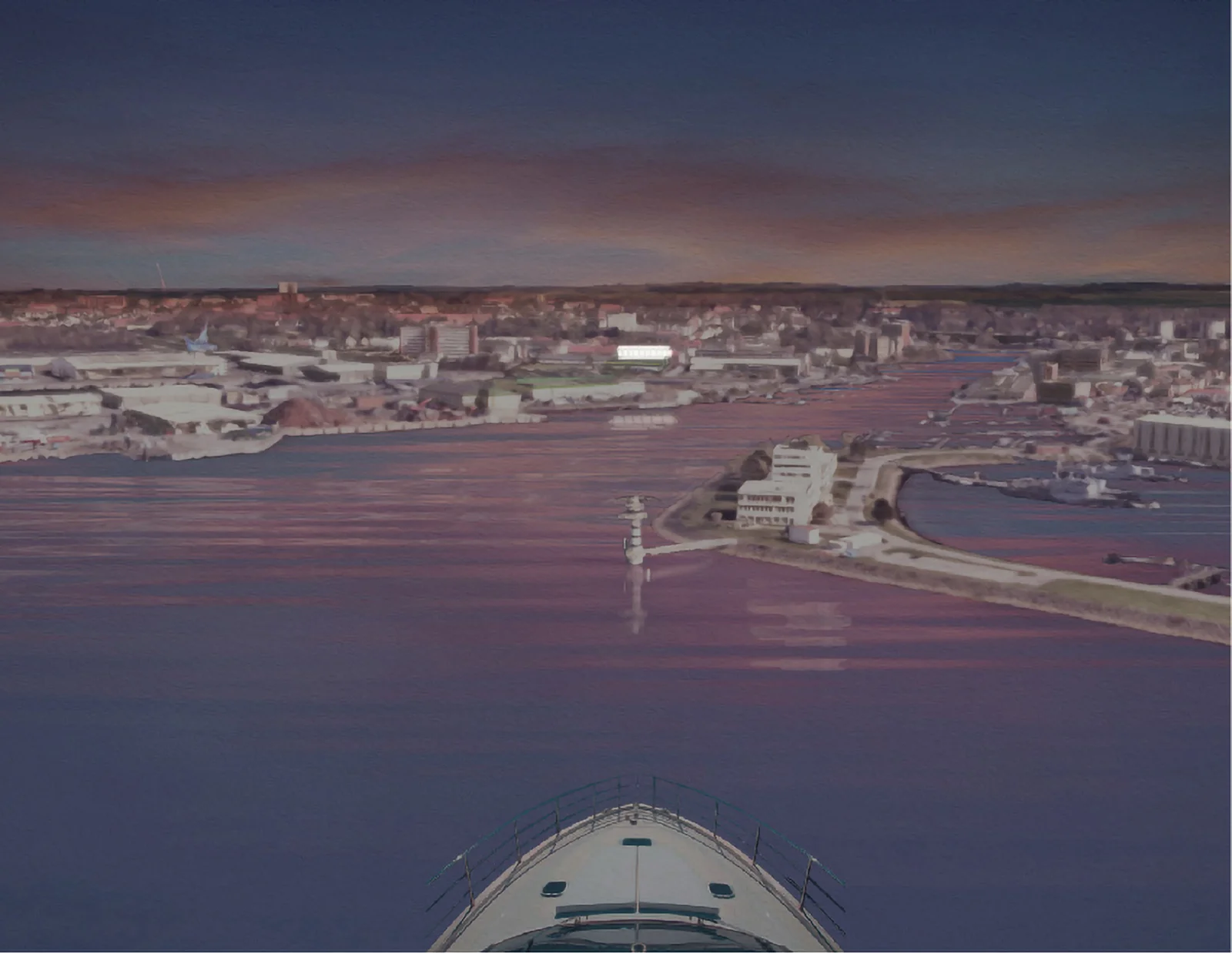
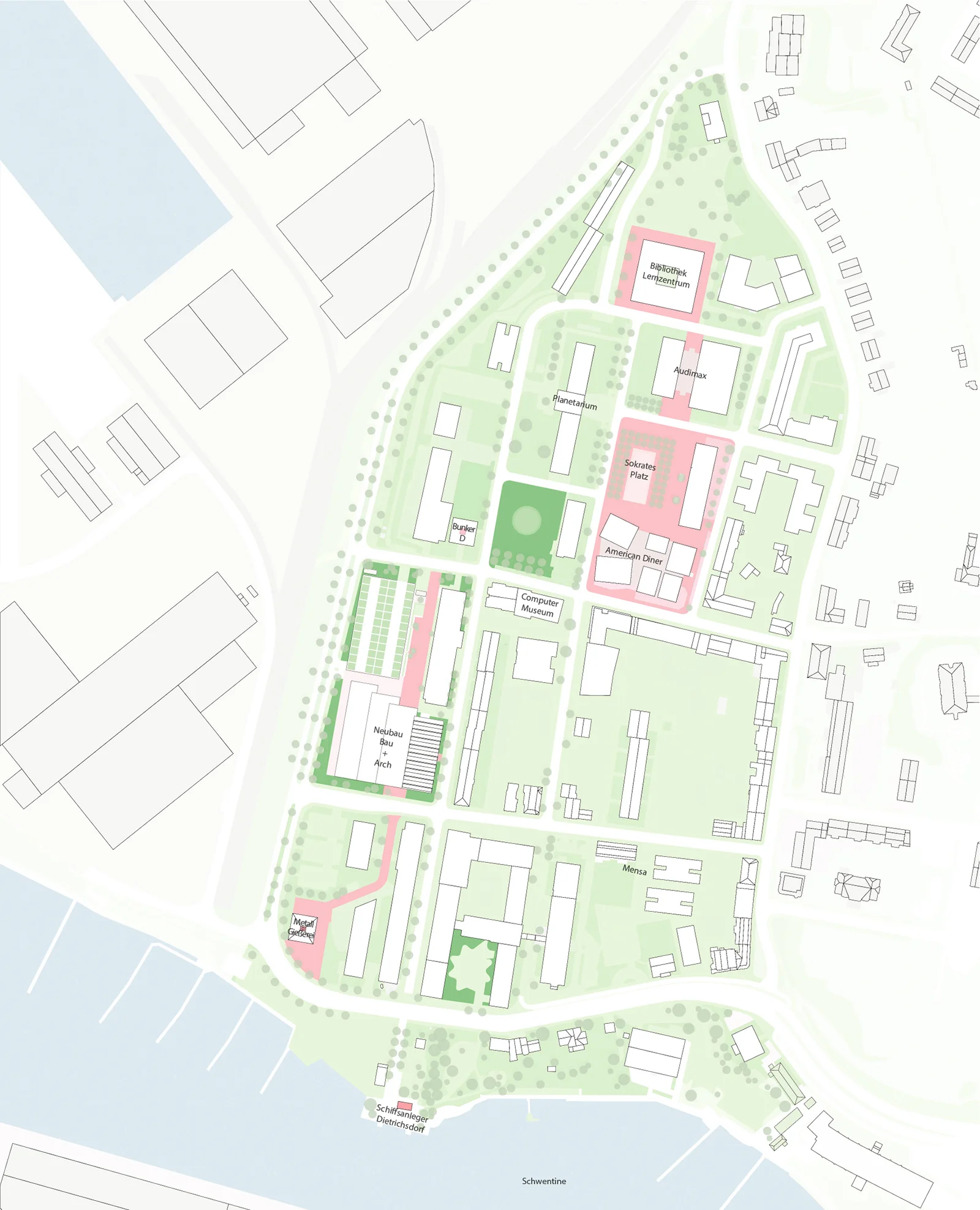
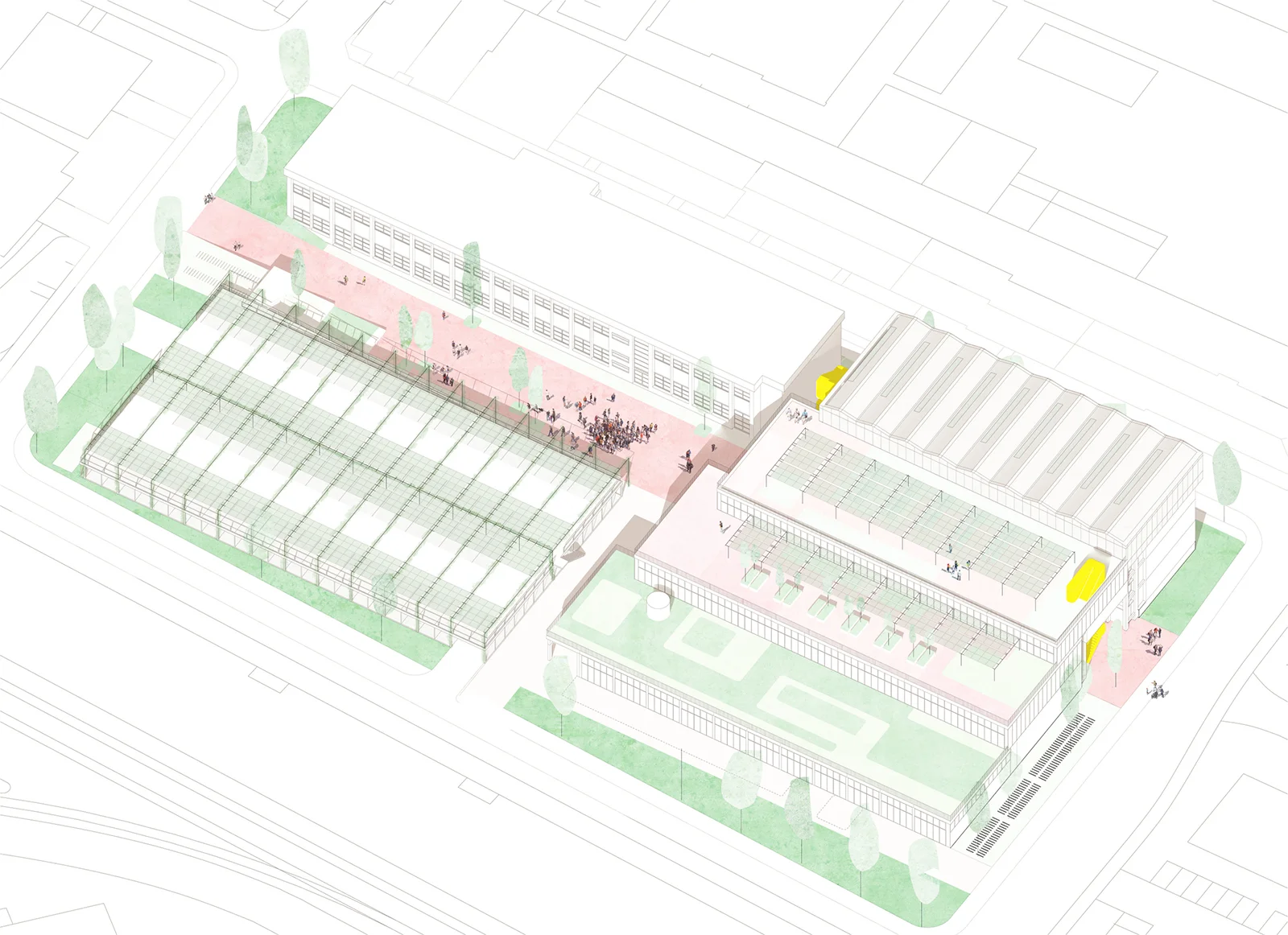
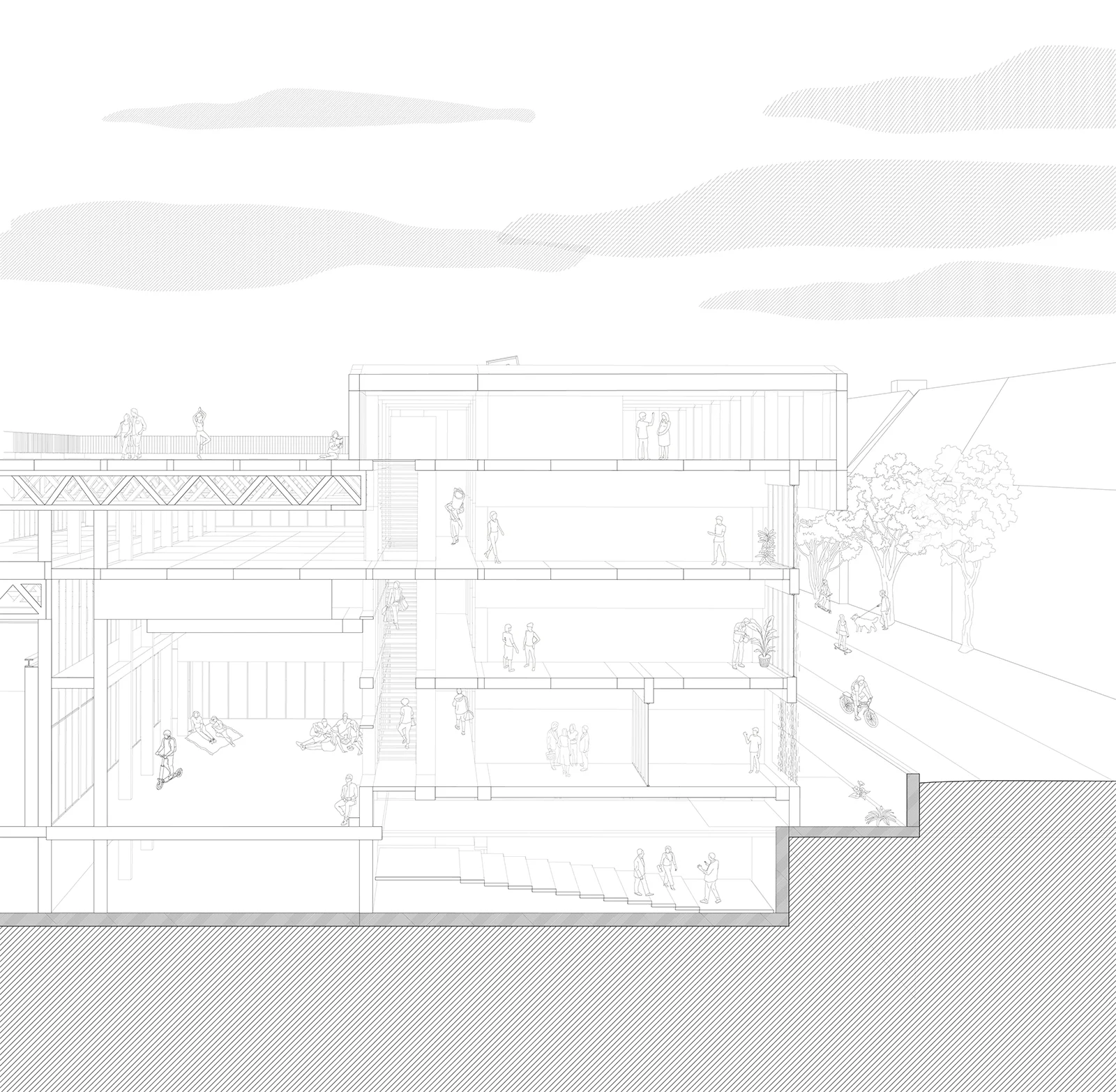
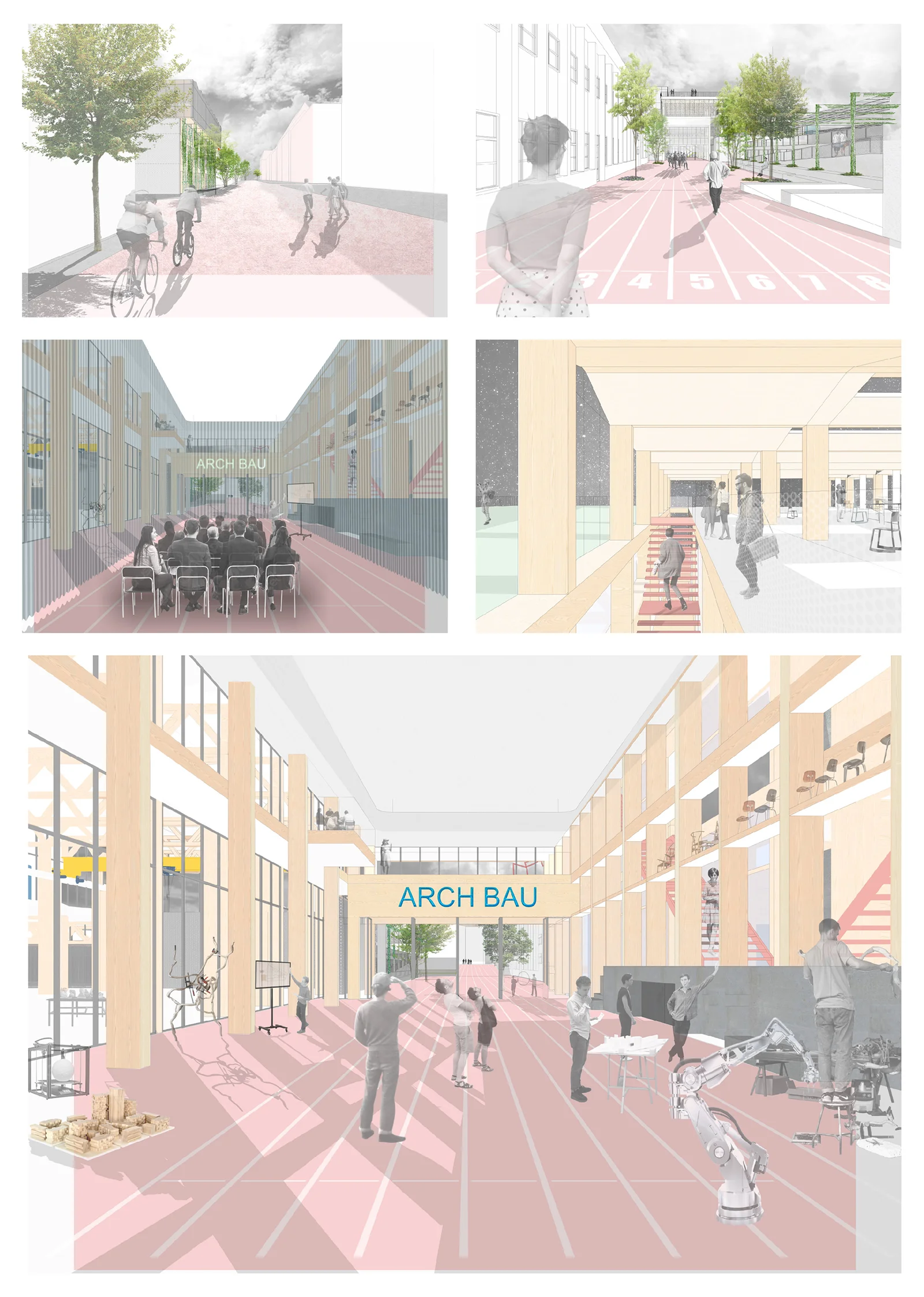
The open competition for the Kiel (Germany) School of Architecture extension was a project where we received honorable mention prize among more than 300 international entries. Our proposal directly responded to the opposition between the classical educational typology of the 1960s — with its conventional classroom structures — and the needs of contemporary architectural education. The existing school building is limited by restrictive teaching spaces, a lack of areas for interaction, and a traditional office-like aesthetic that does not reflect the creativity fostered in architecture schools.
The proposed extension was envisioned as an open structure capable of accommodating flexible and creative educational programs. On one side, the structure offers standardized classroom spaces, while the central part extends the existing public core — the "stripe." This stripe flows into the new building, functioning not only as a passage and connector but also as an open space for diverse interpretations of architectural learning. The terrace structure of the complex further emphasizes public and open-air spaces for non-traditional teaching, including the possibility of outdoor classes on the roof terraces. Always oriented toward the waterfront, these terraces strengthen the connection between the school and the city.
Beuys Open Source
Exhibition Design for the group exhibition called Joseph Beuys Open source
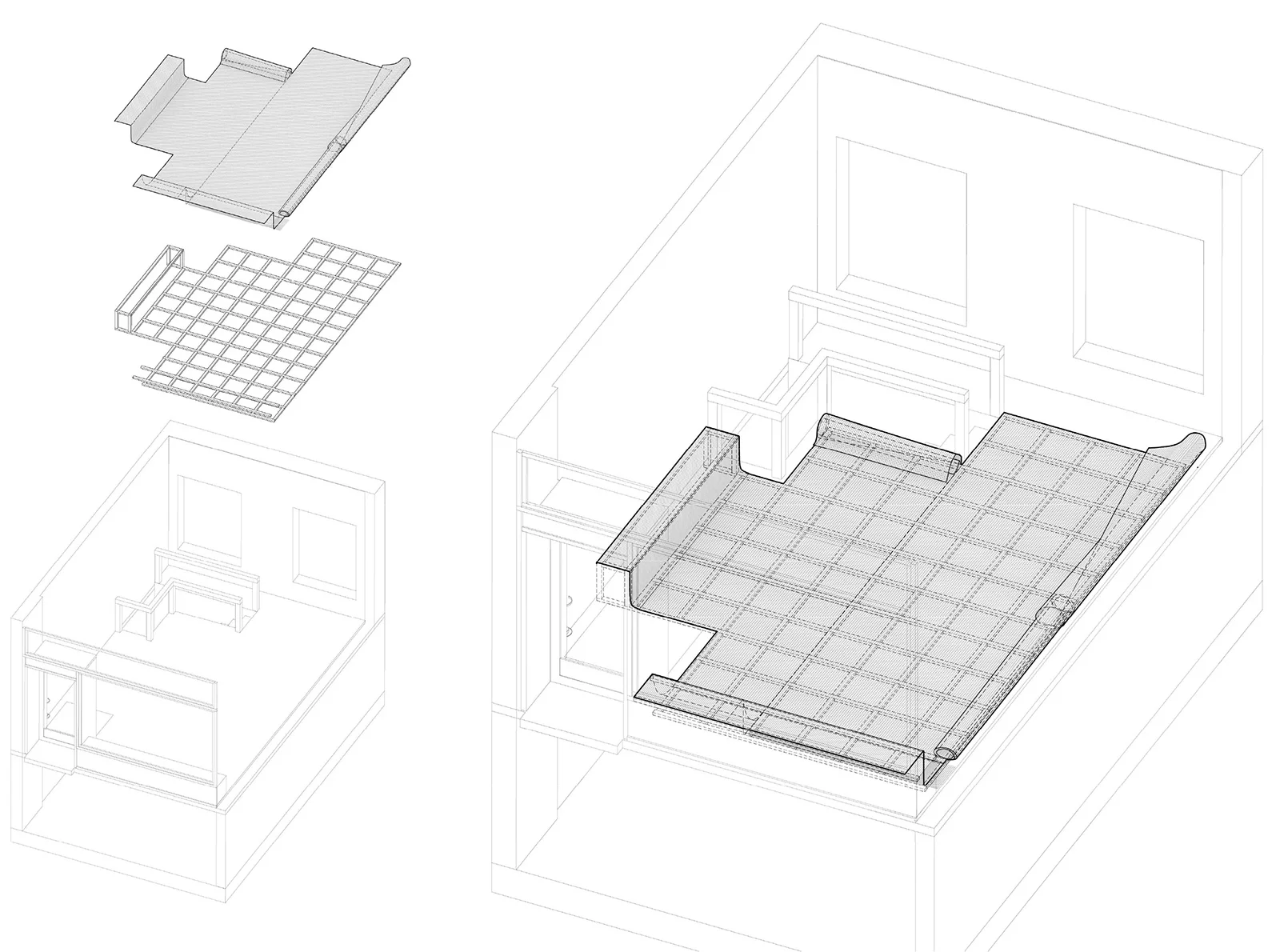
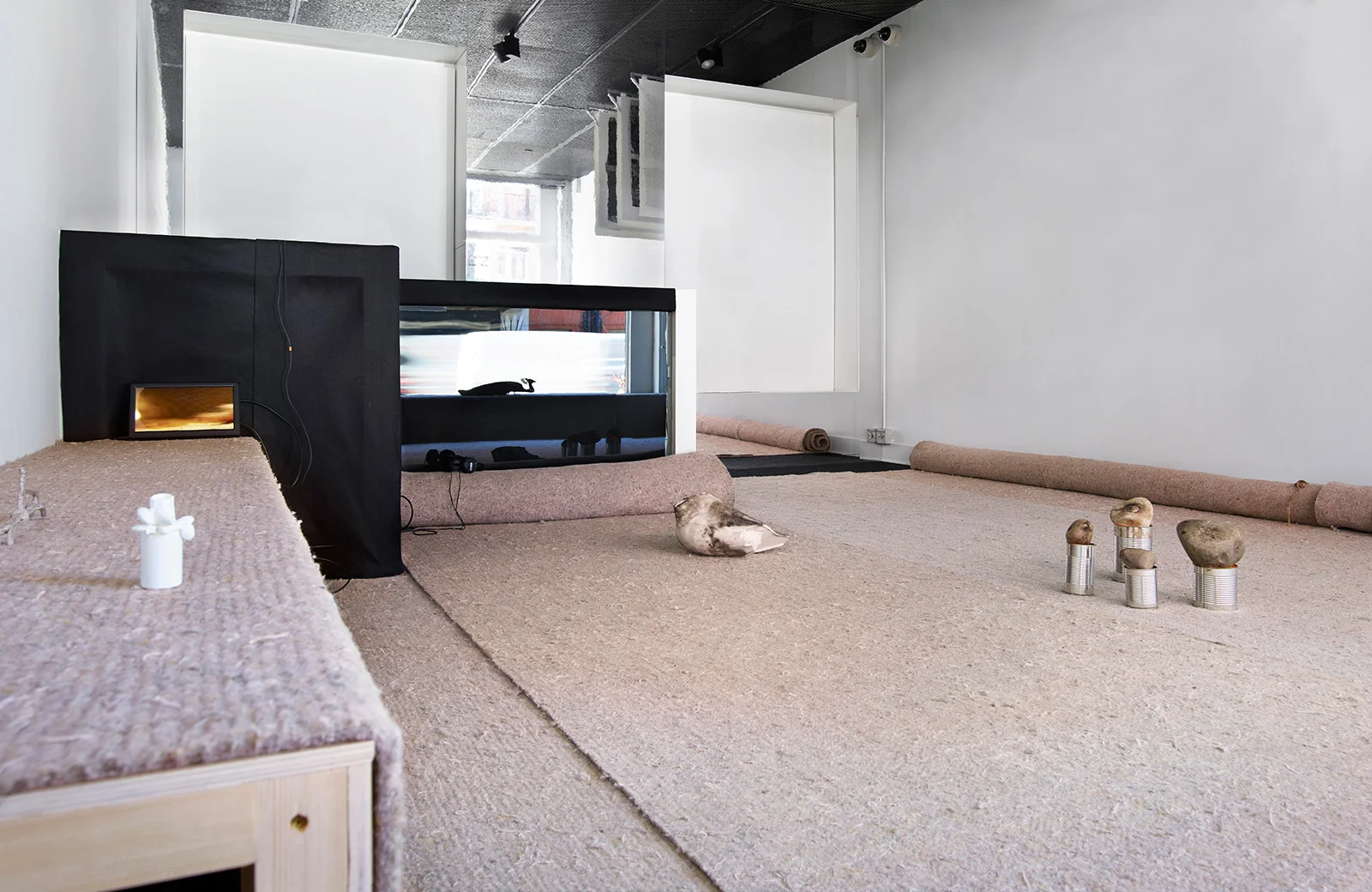
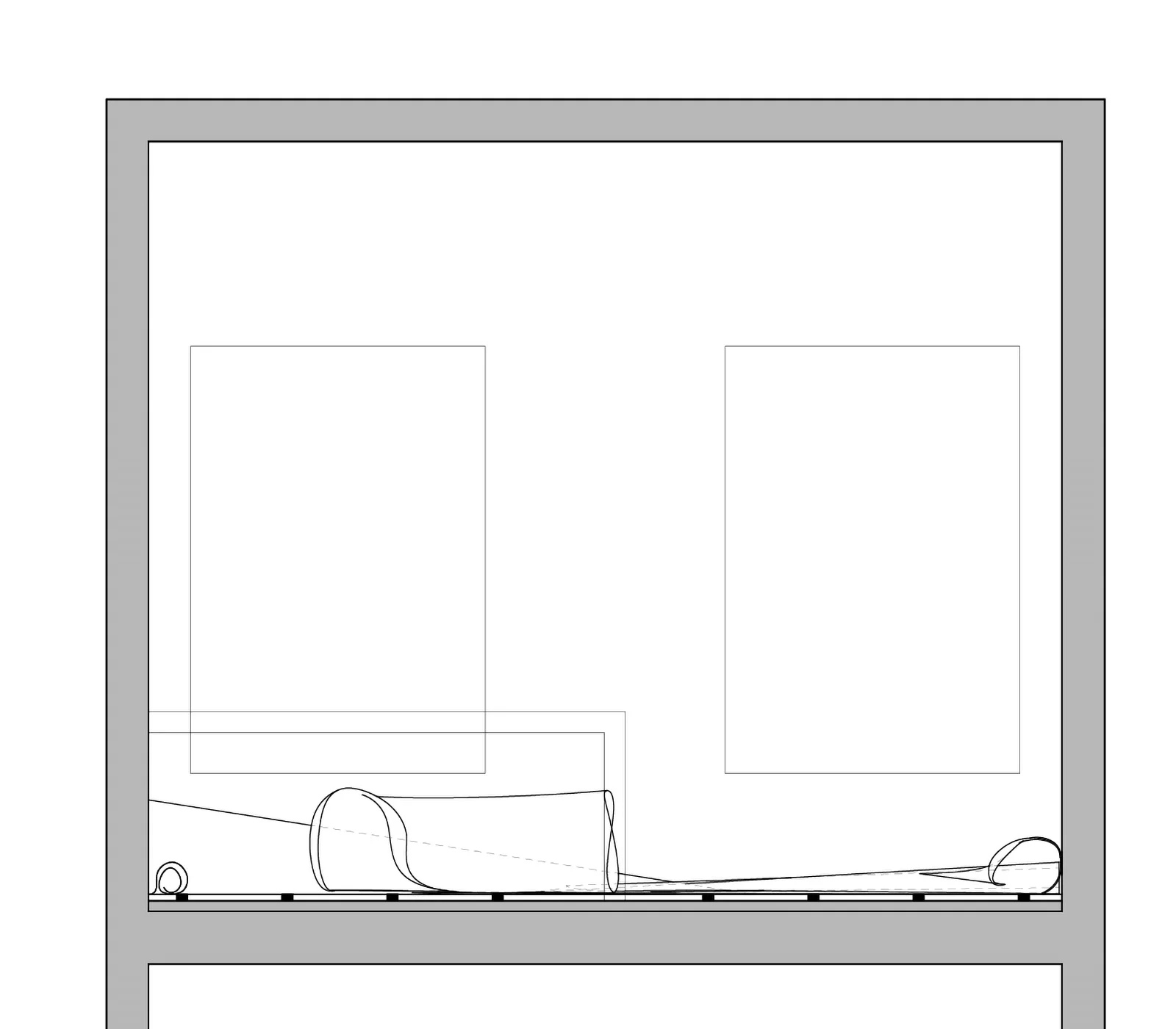
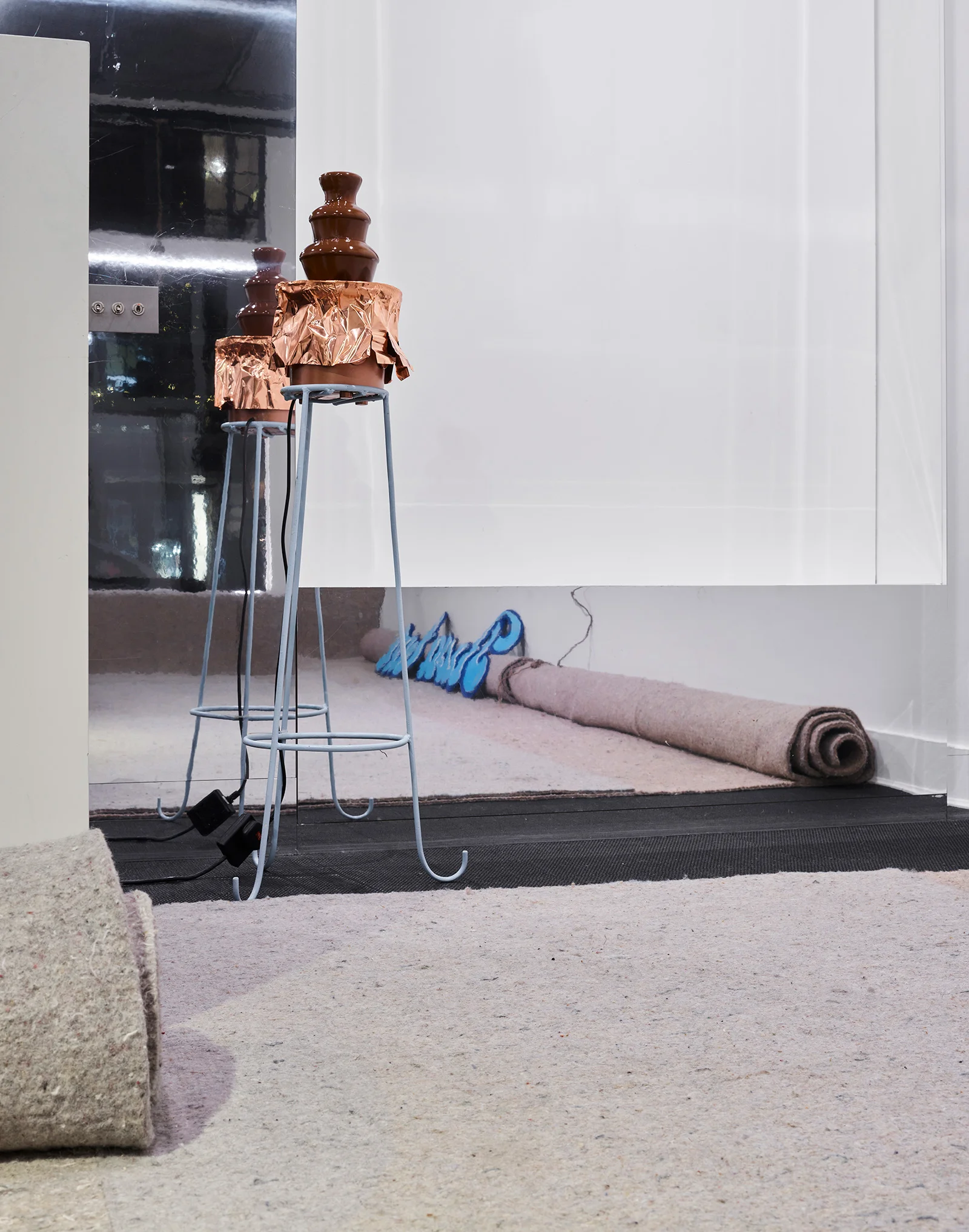
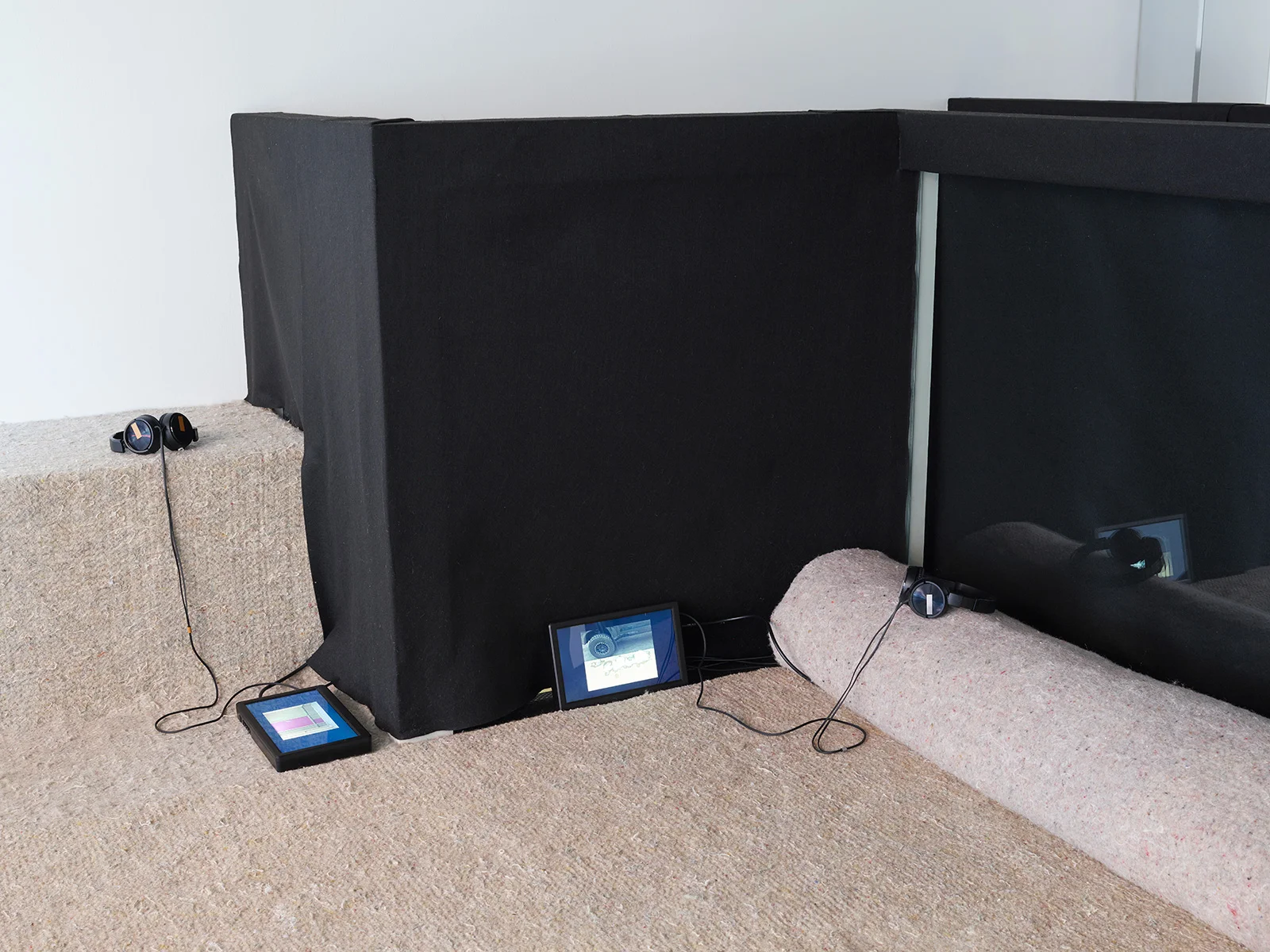
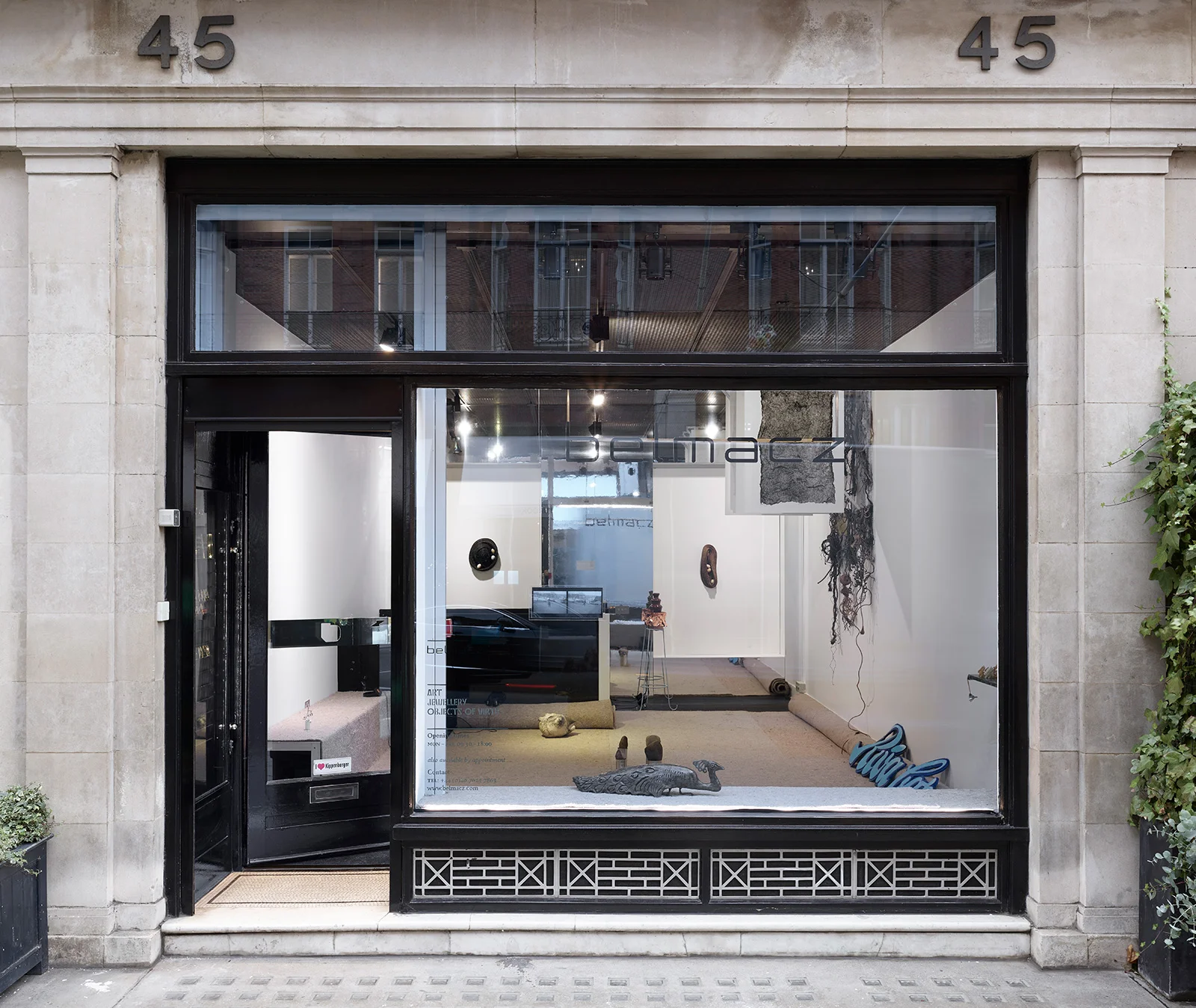
For the group exhibition Beuys Open Source at Belmacz Gallery in London, the iconic artwork created served as the inspiration for the exhibition design. It was based on Beuys' Fat Felt Sculpture (Fat Battery), 1963, and other works using the box as a recurring form. As with Beuys' own practice, personal mythology was central, and each work in the exhibition carried its own narrative. The design treated the gallery space as a white box to be opened, creating a felt landscape capable of hosting different artworks, all contributing to a larger story centered on Beuys as the main protagonist.
Winter Rose
Realization of Group Exhibition Design in Mali Iž, Croatia
A community exhibition intervention in the cultural center, created together with architects Ana
Filipović and Iva Baljkas, showcasing ten international artists.
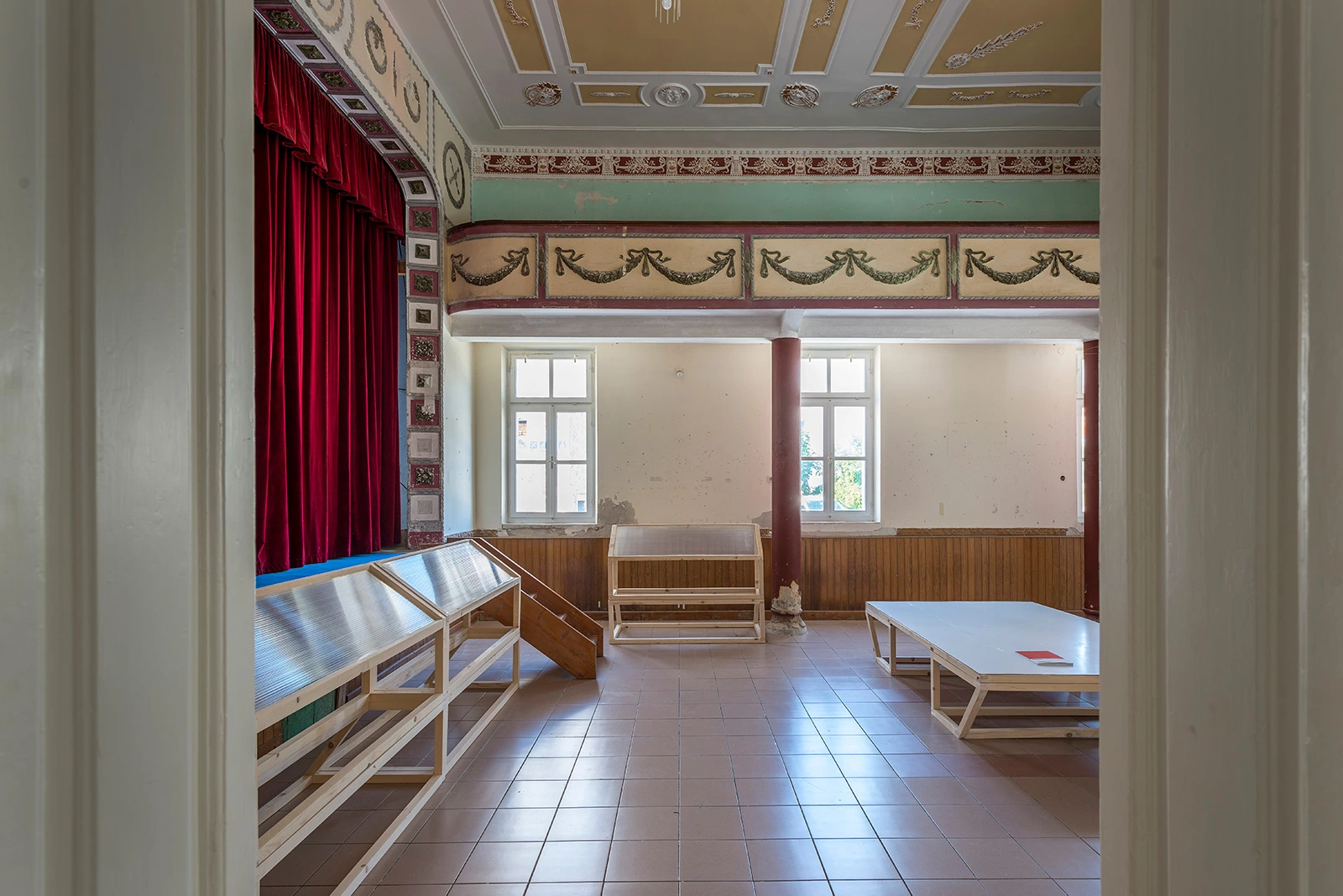
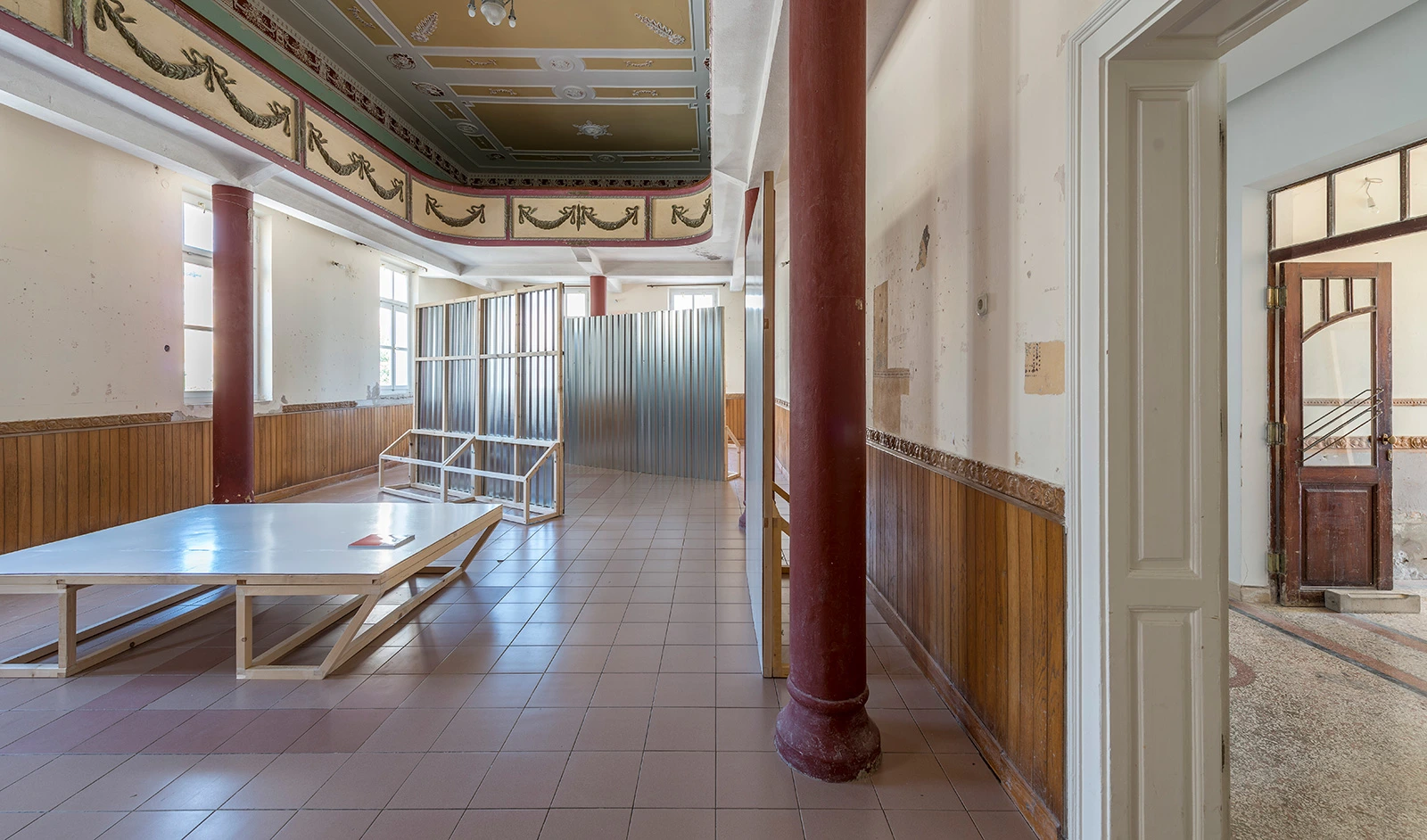
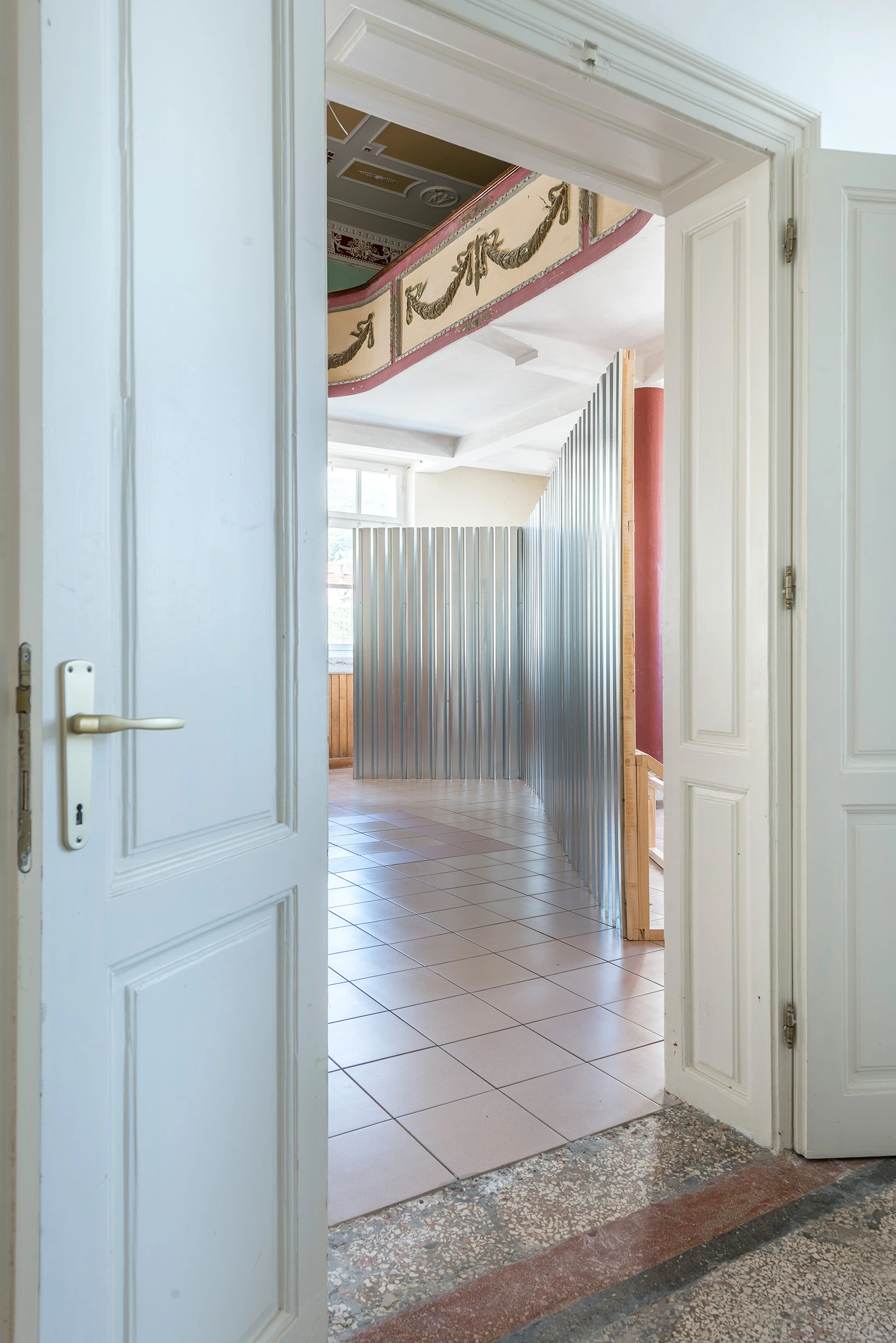
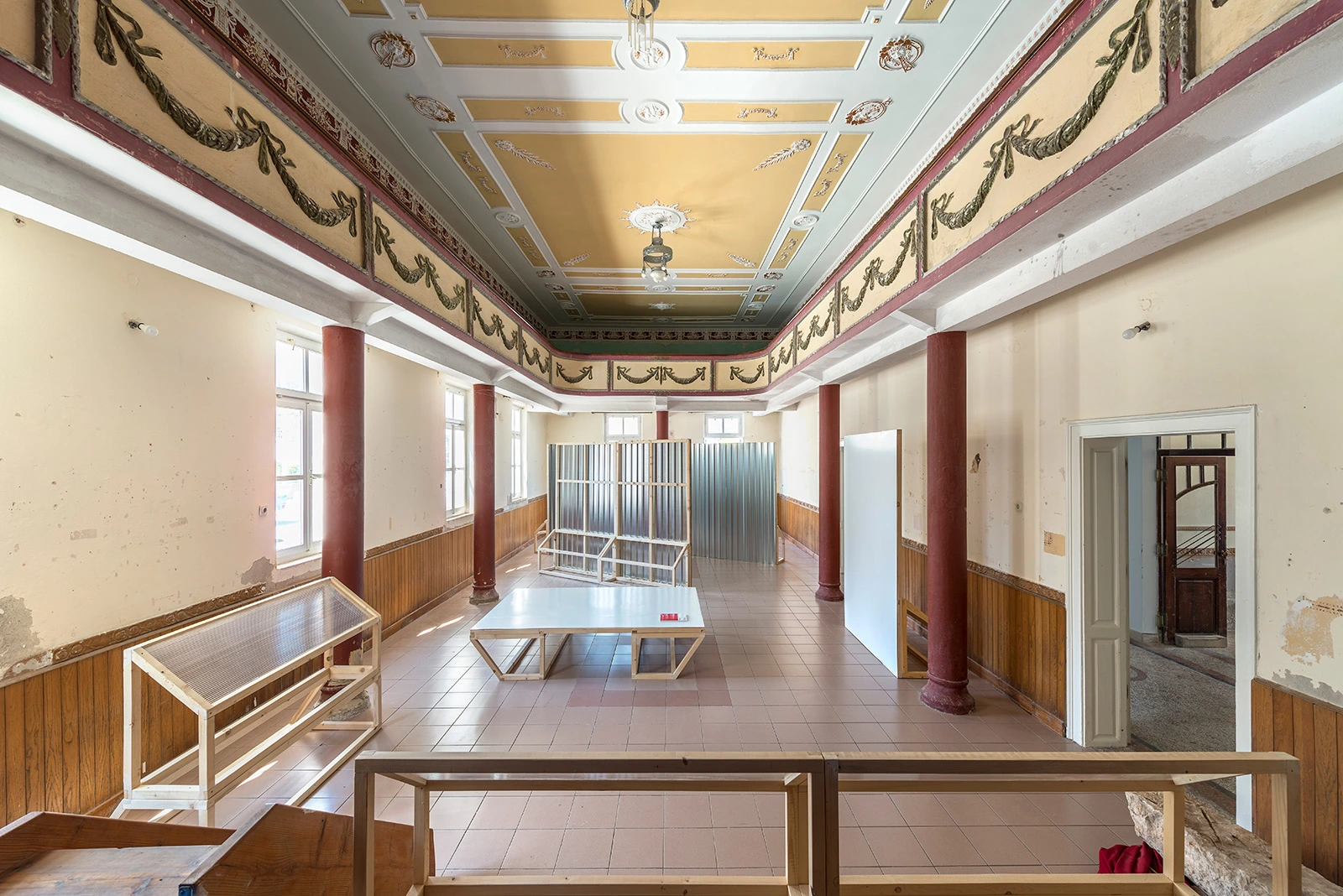
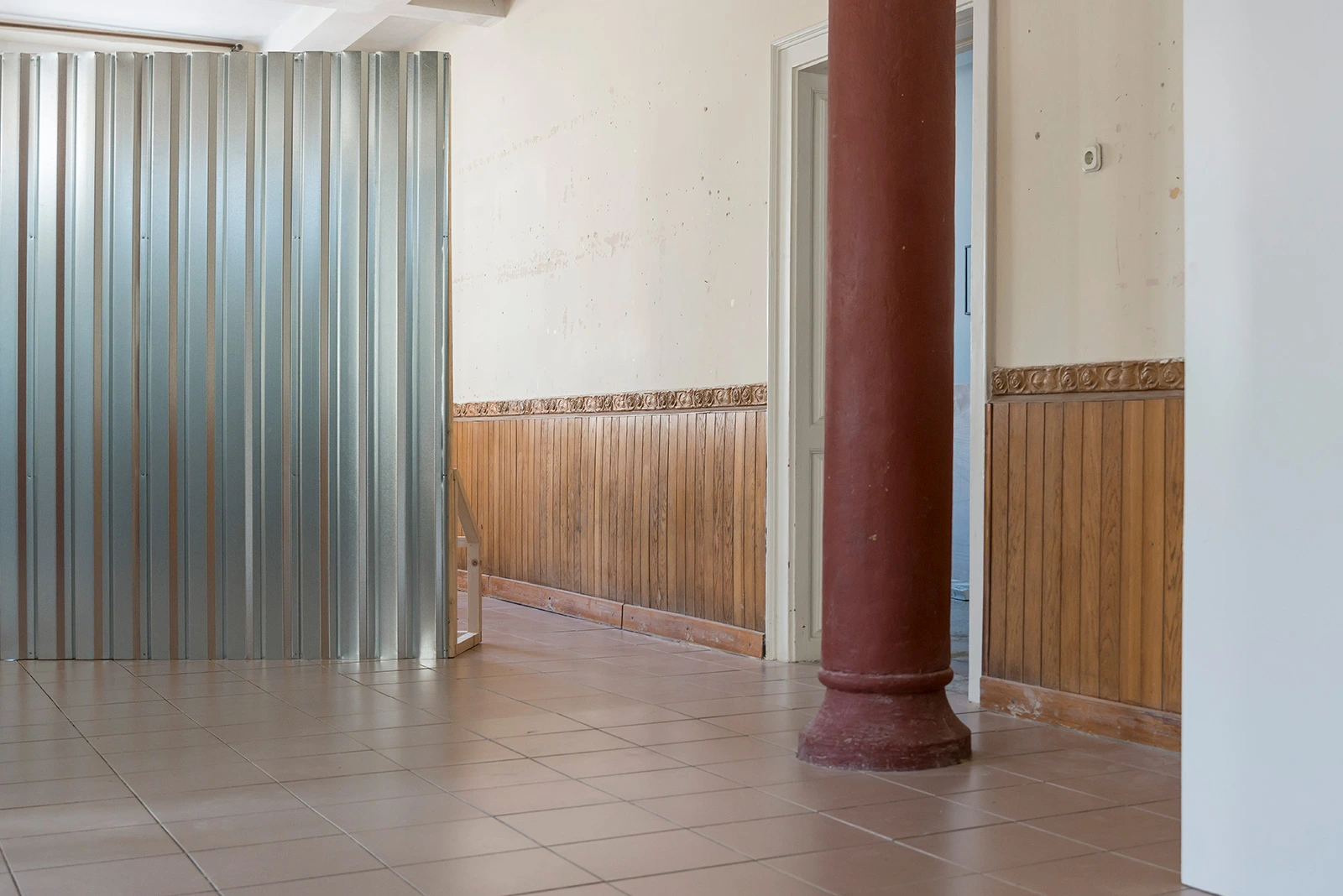
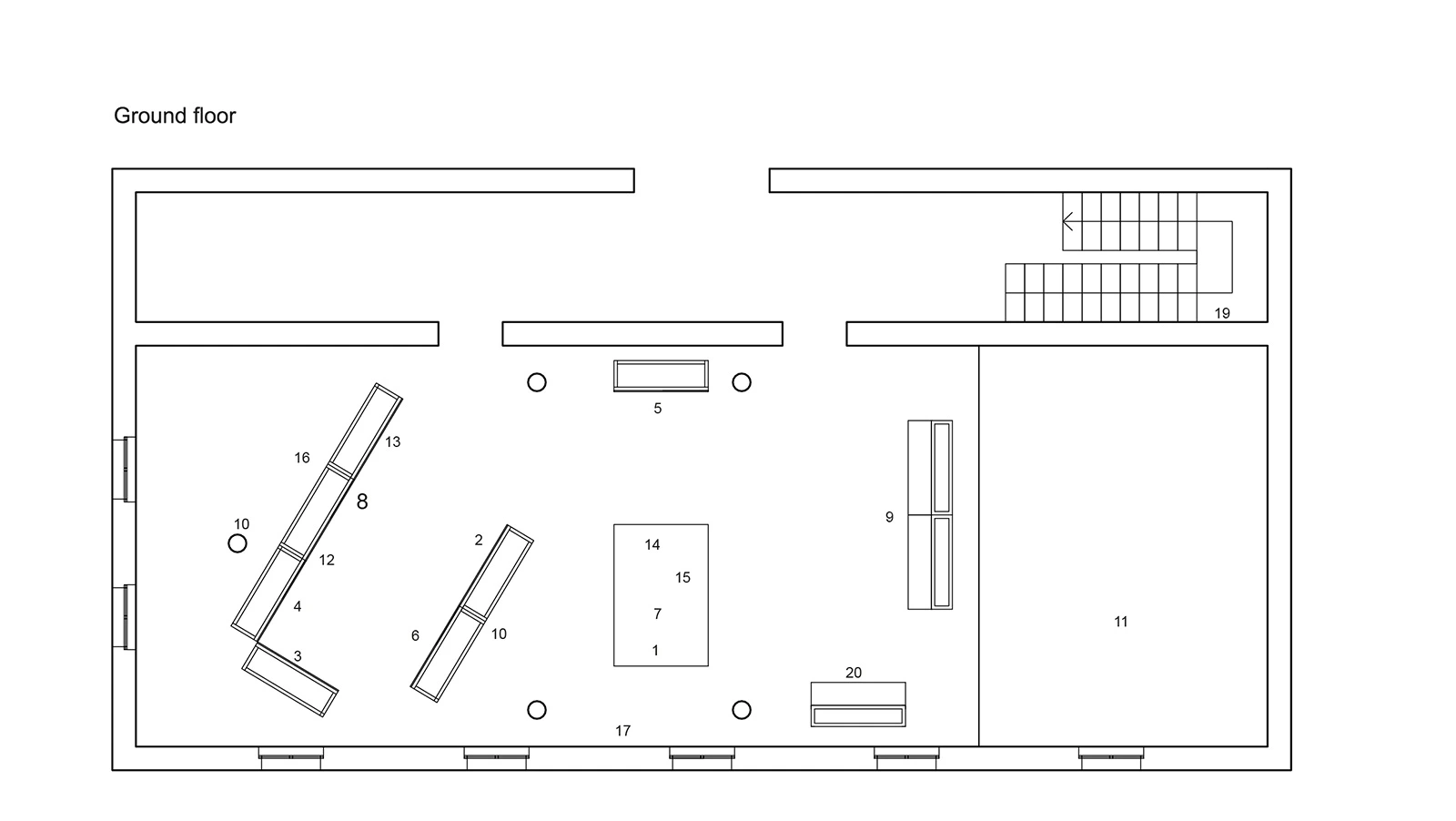
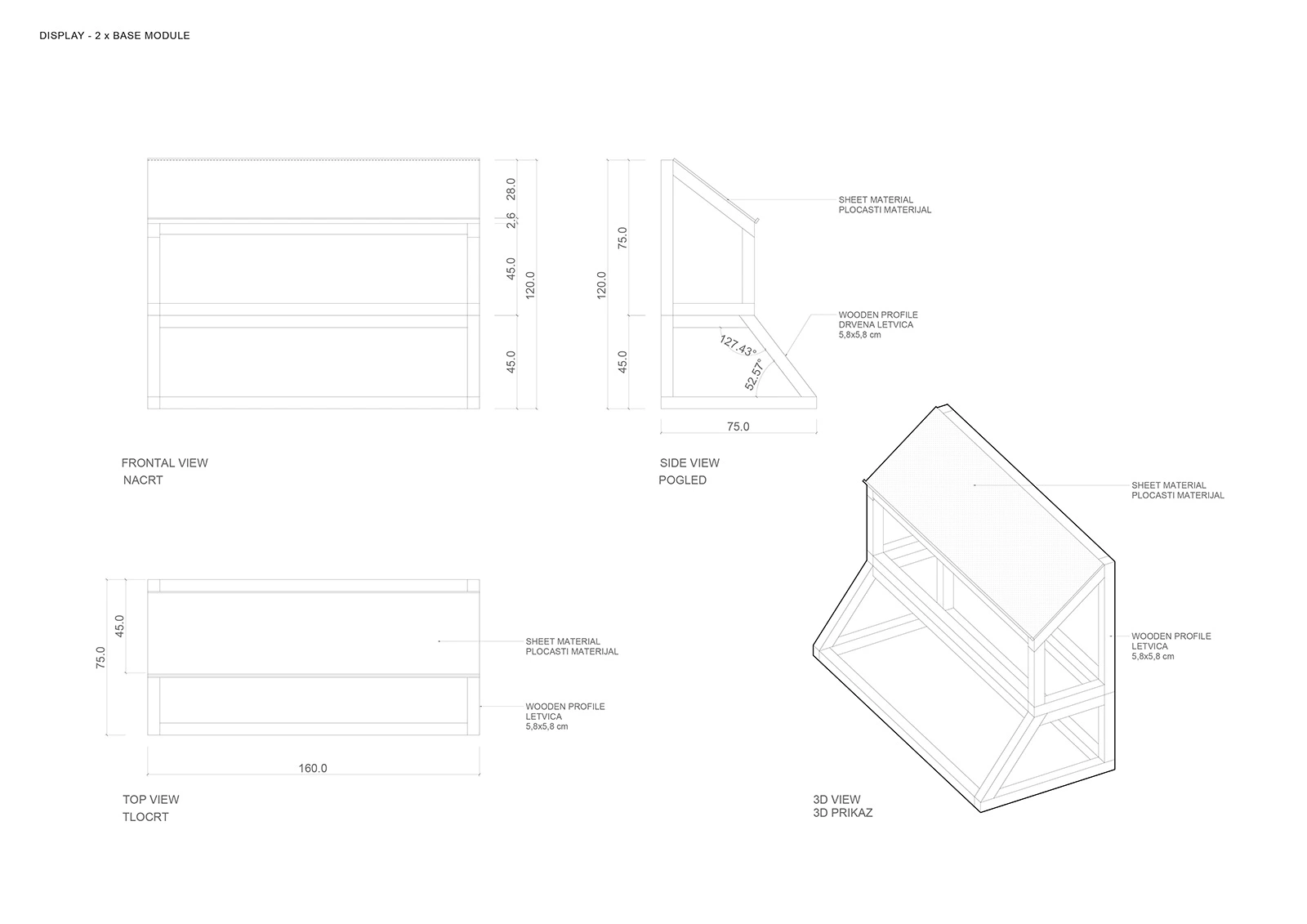
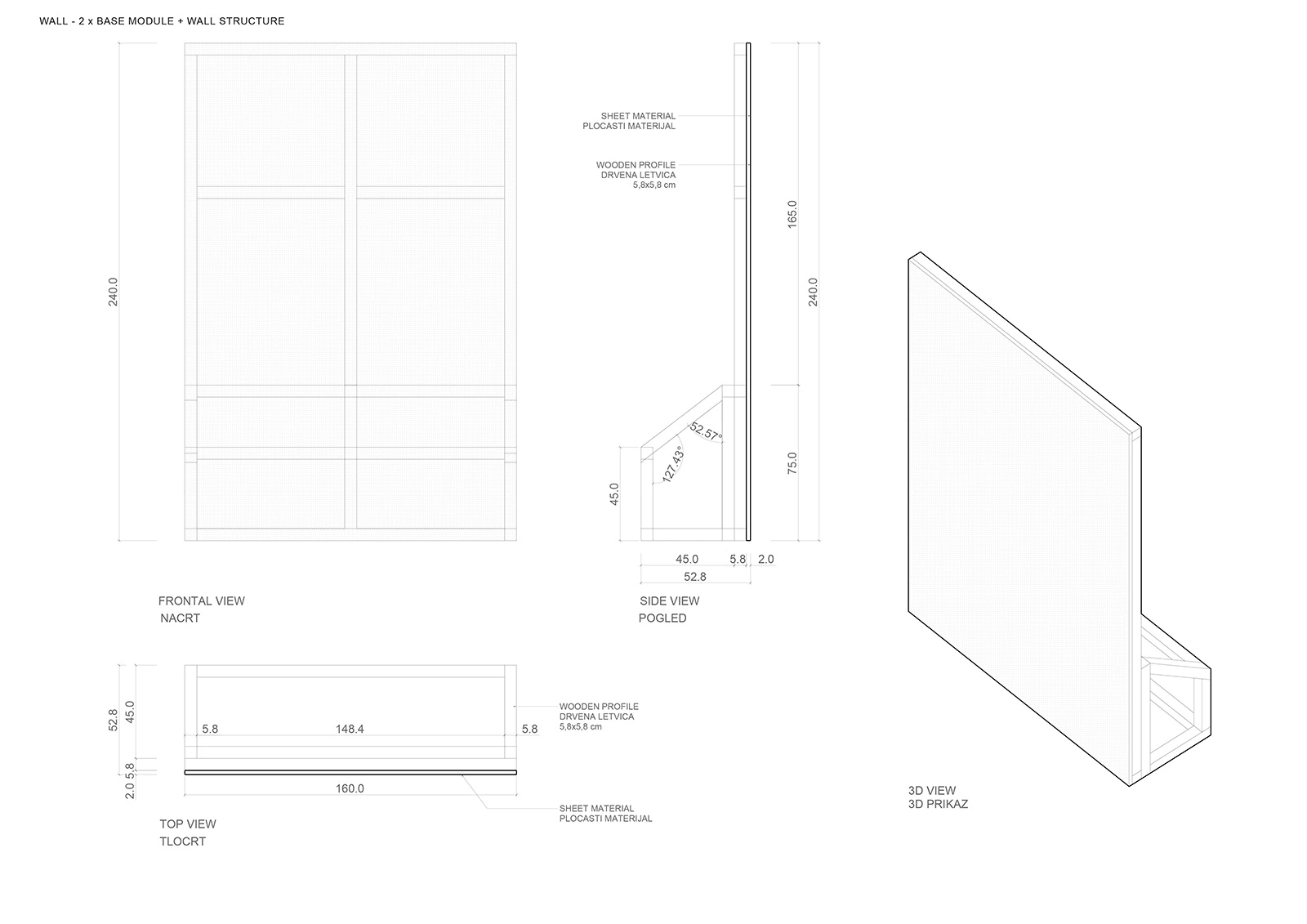
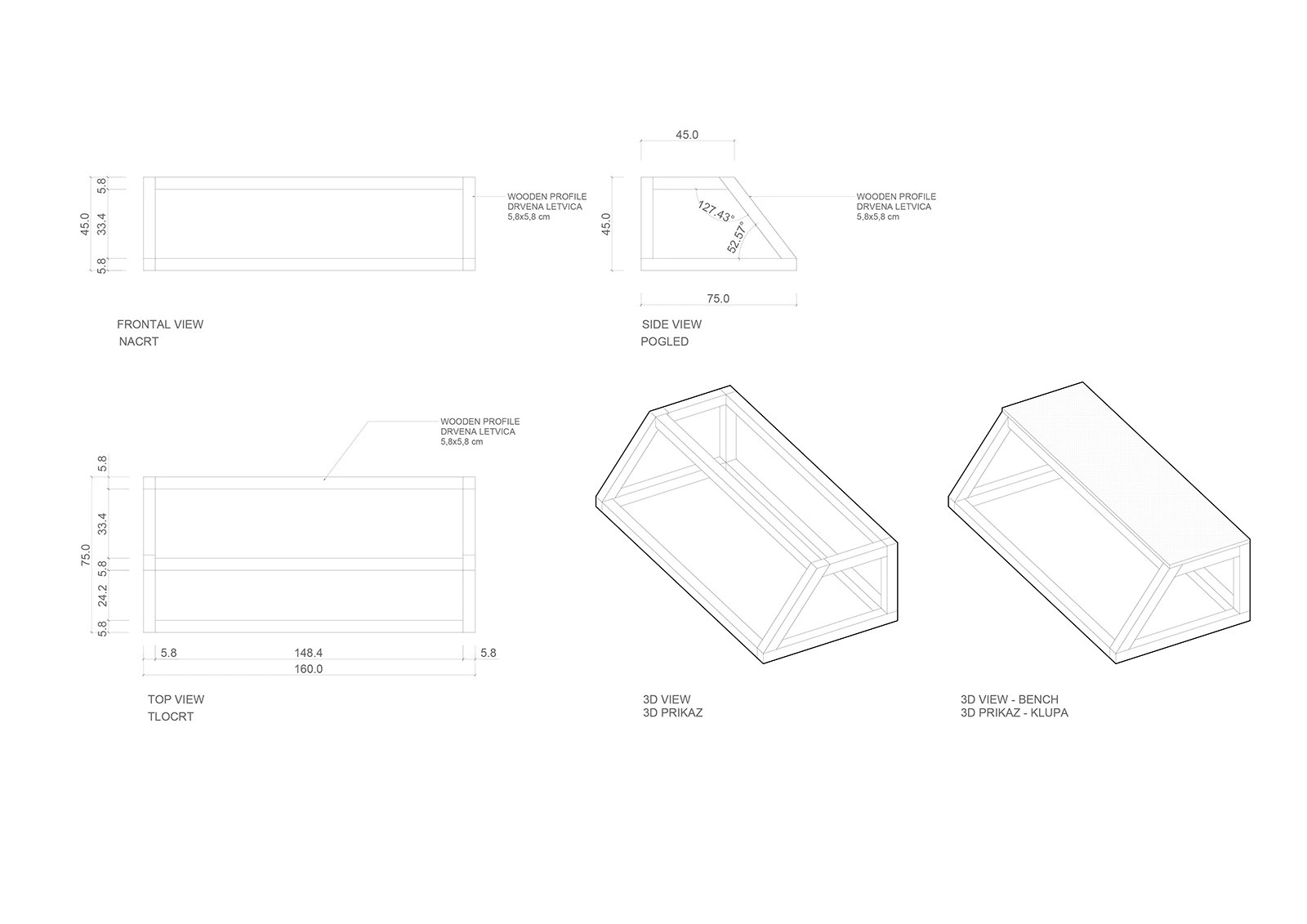
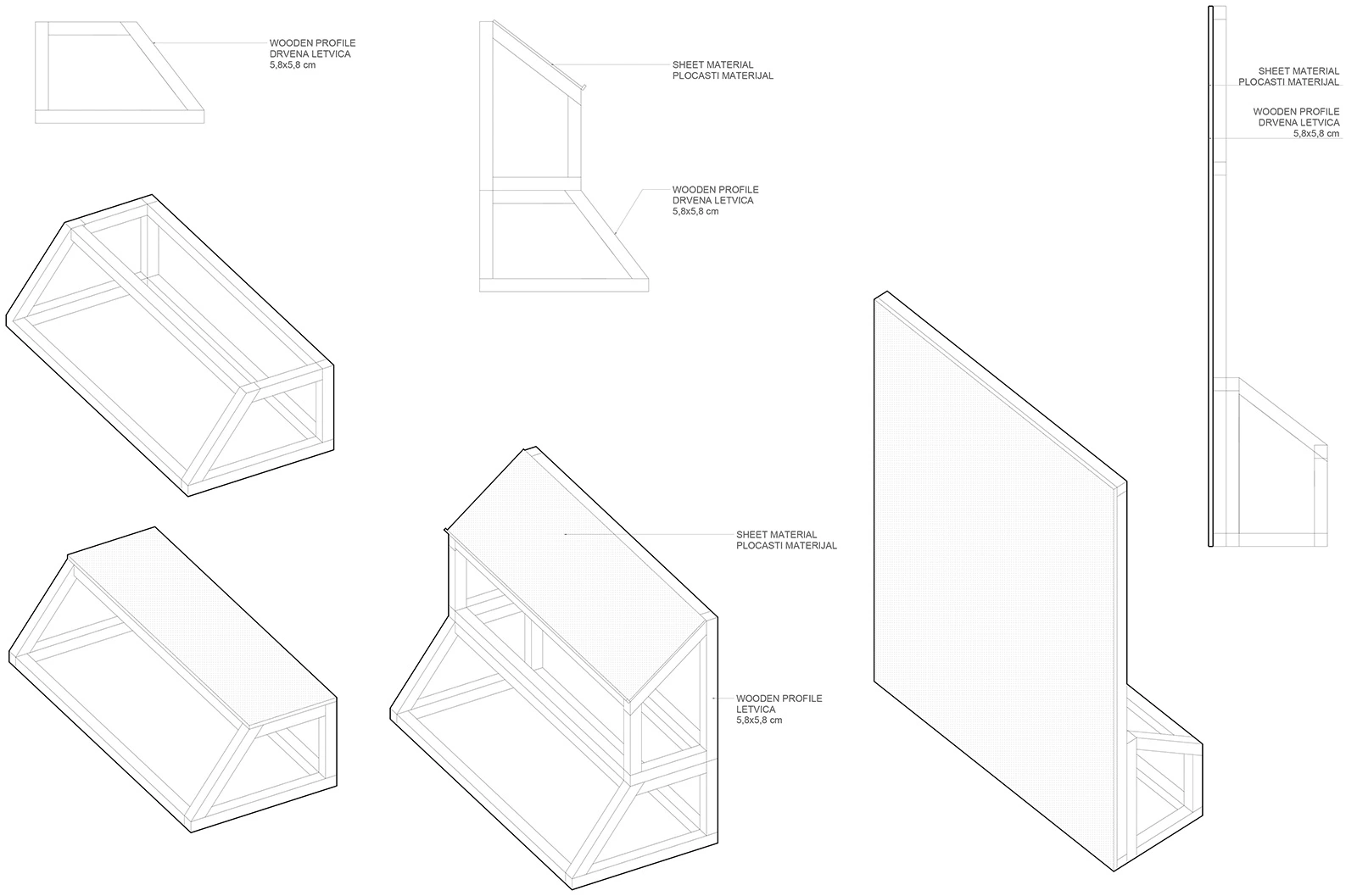
The project is an exhibition design conceptualized as a modular system of walls, podiums, and display cases, serving as a flexible installation for the group exhibition that took place in September 2021 at the cultural center on the island of Iž in Croatia. The simple and inexpensive solution derives from a limited budget and the idea of recycling materials after the dismantling of the exhibition.
Old Town Garage
Collaboration with Matthias Hoffman
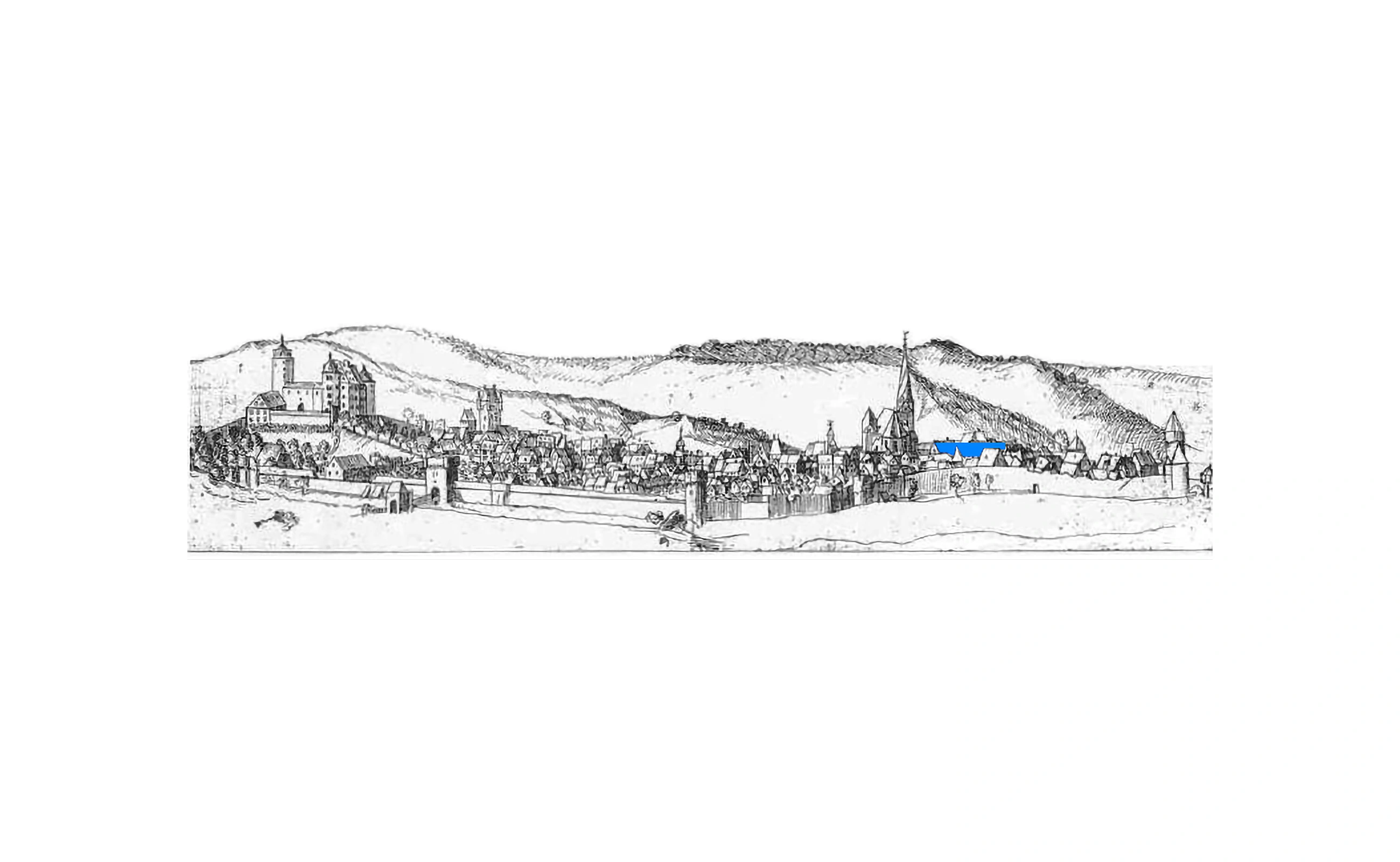
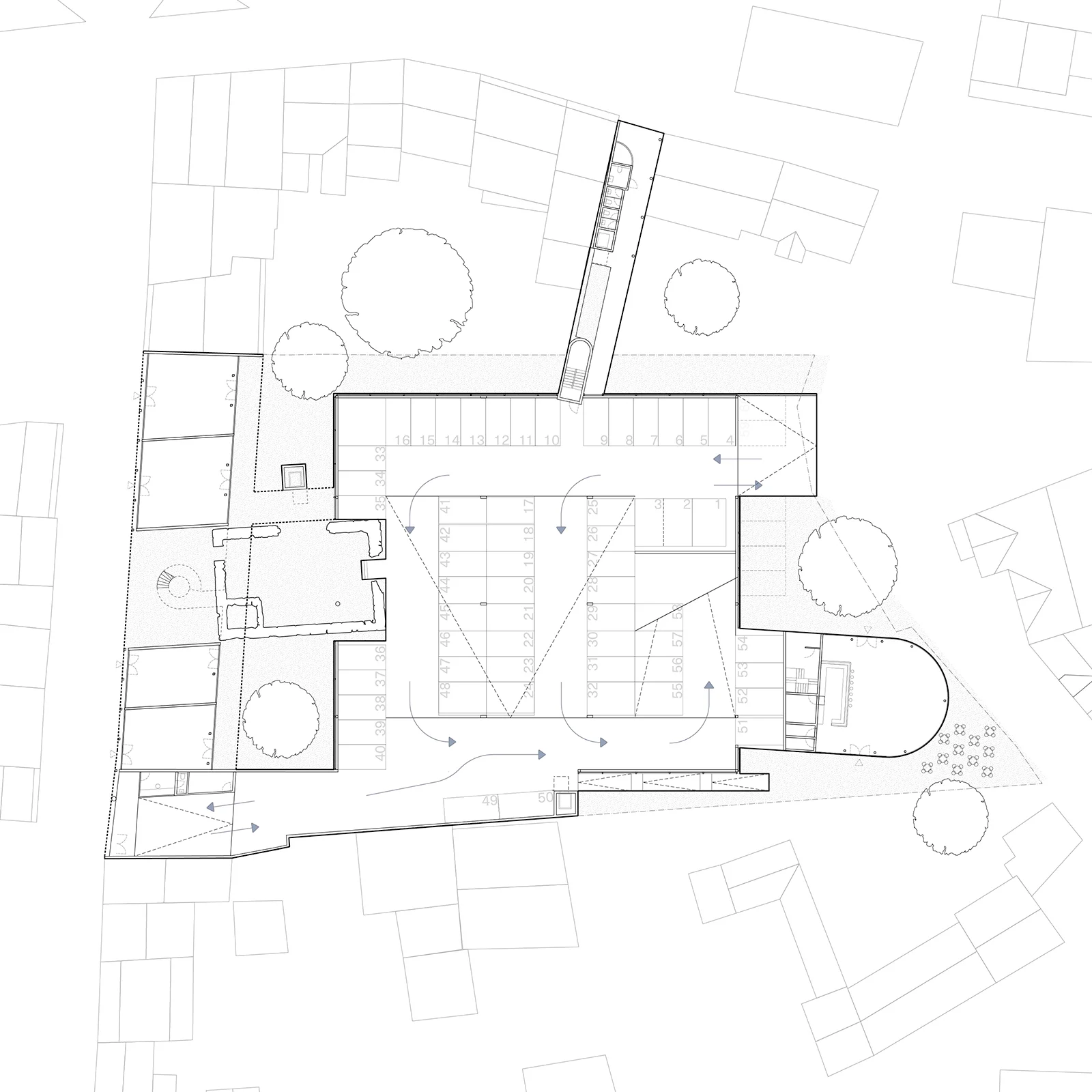
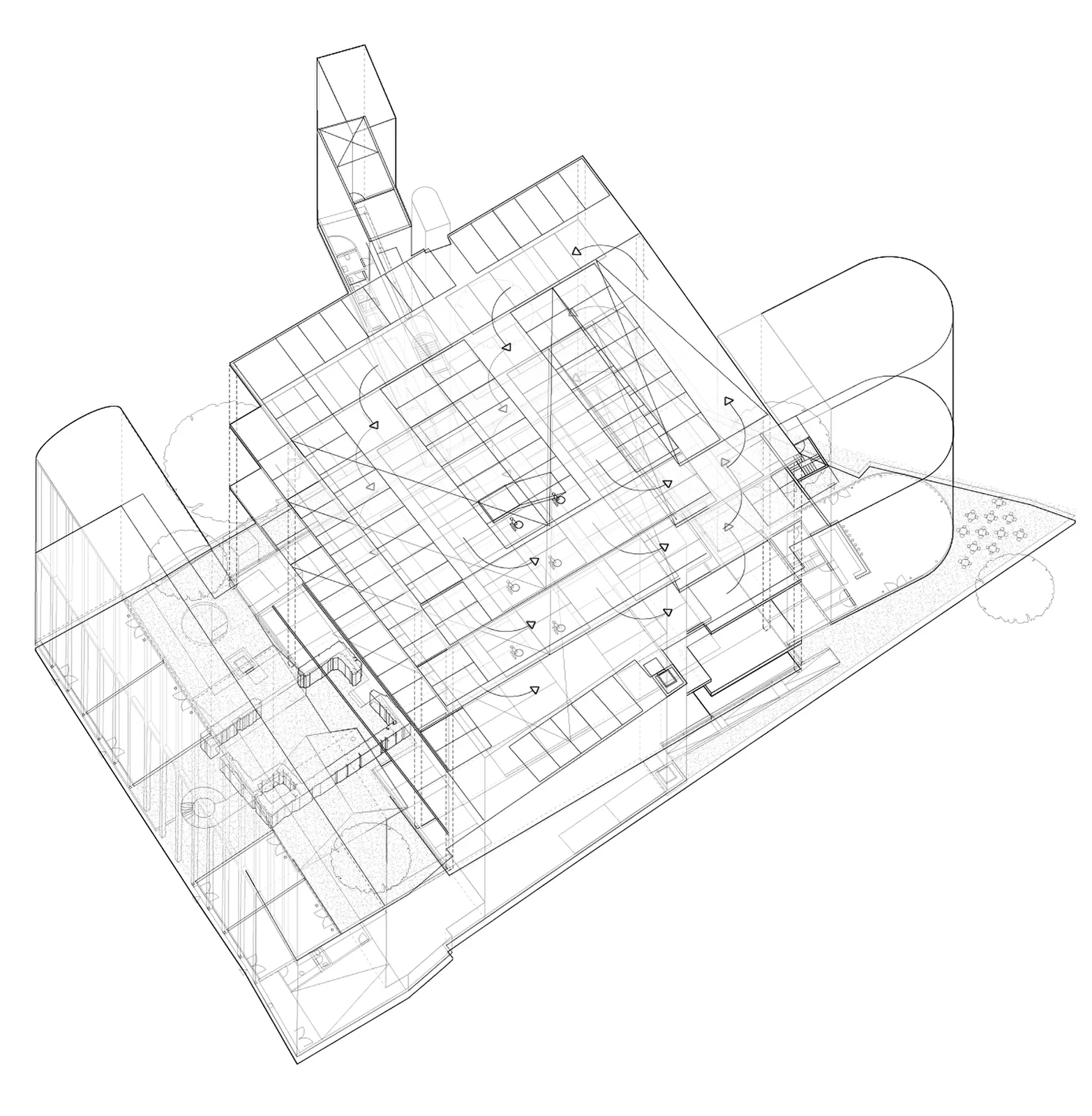
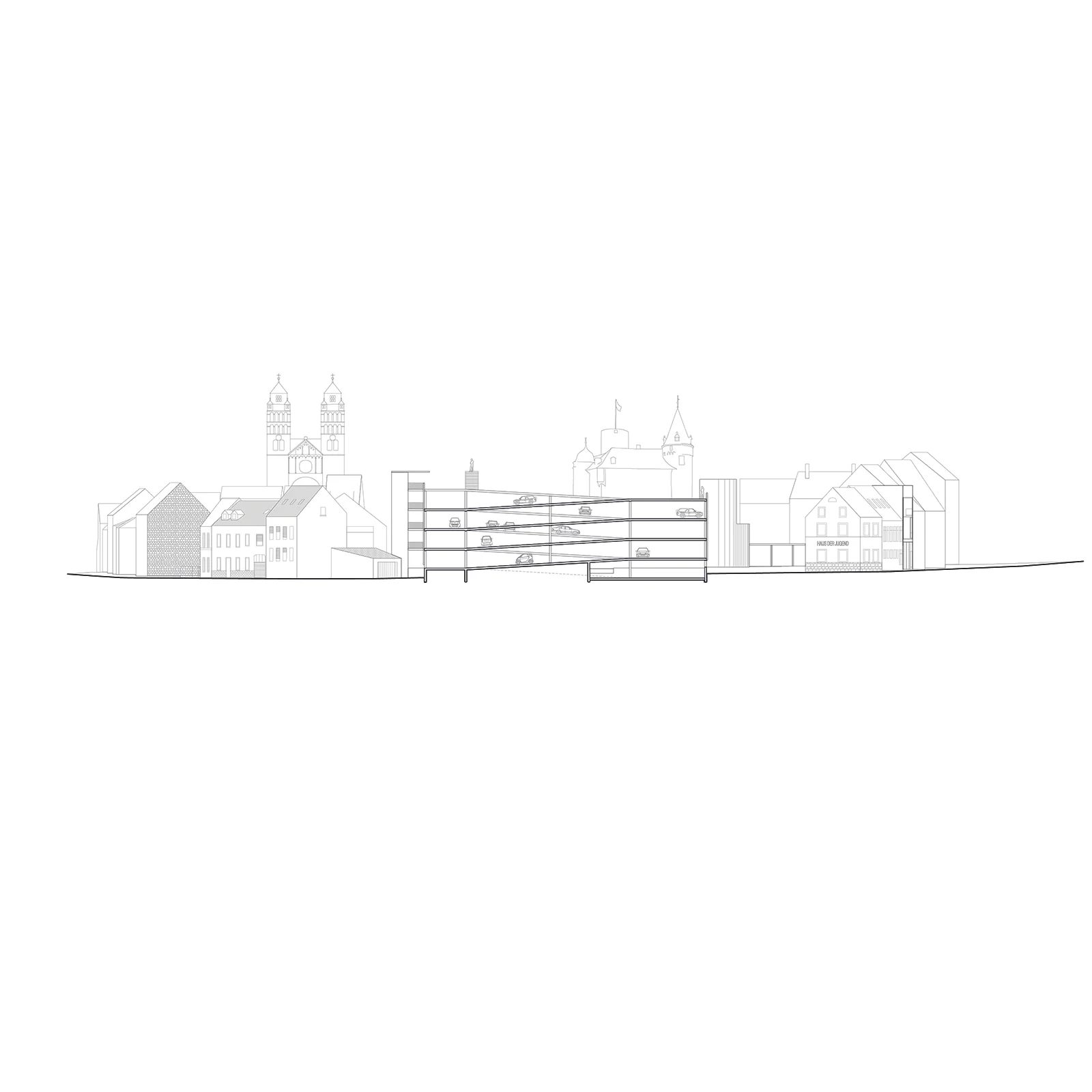
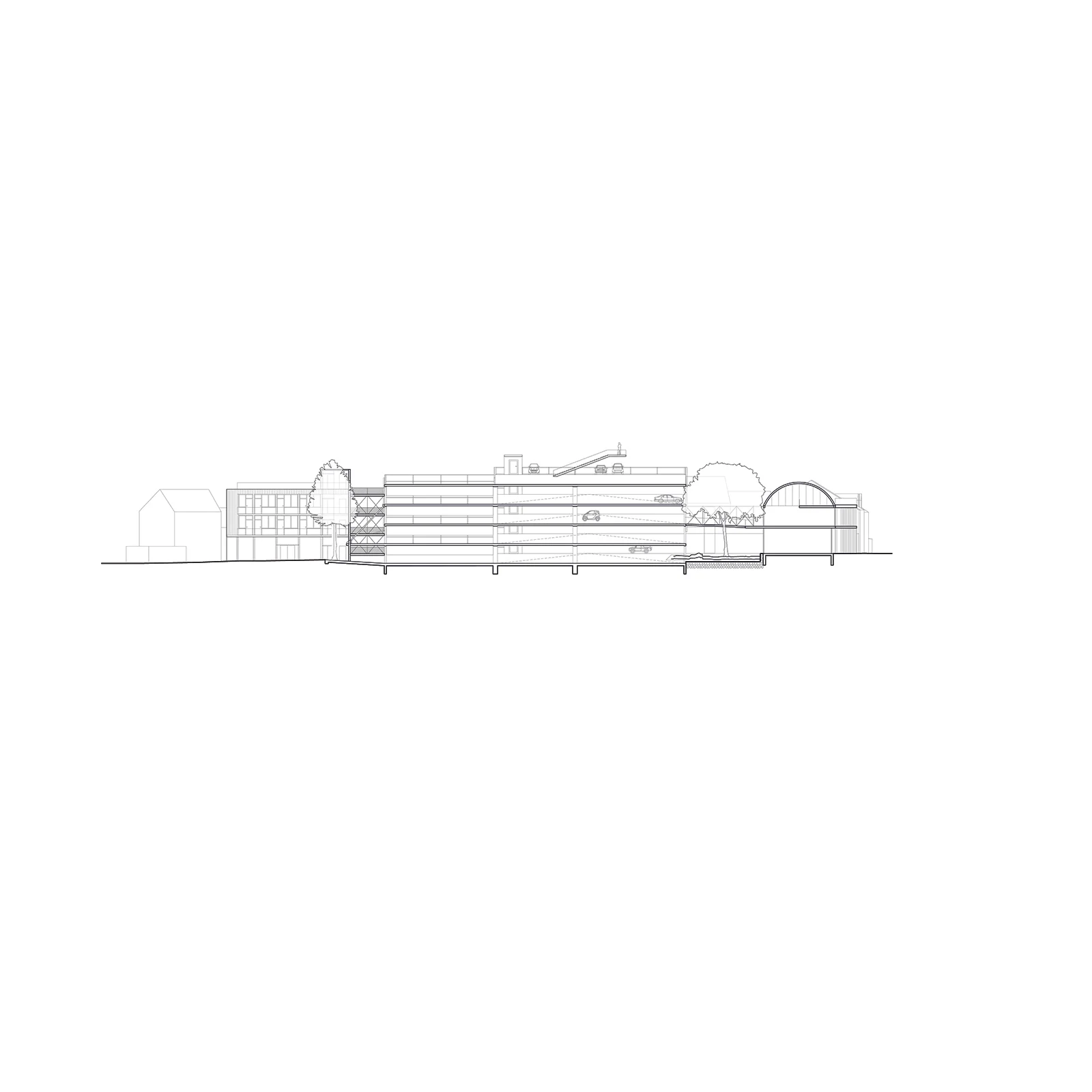
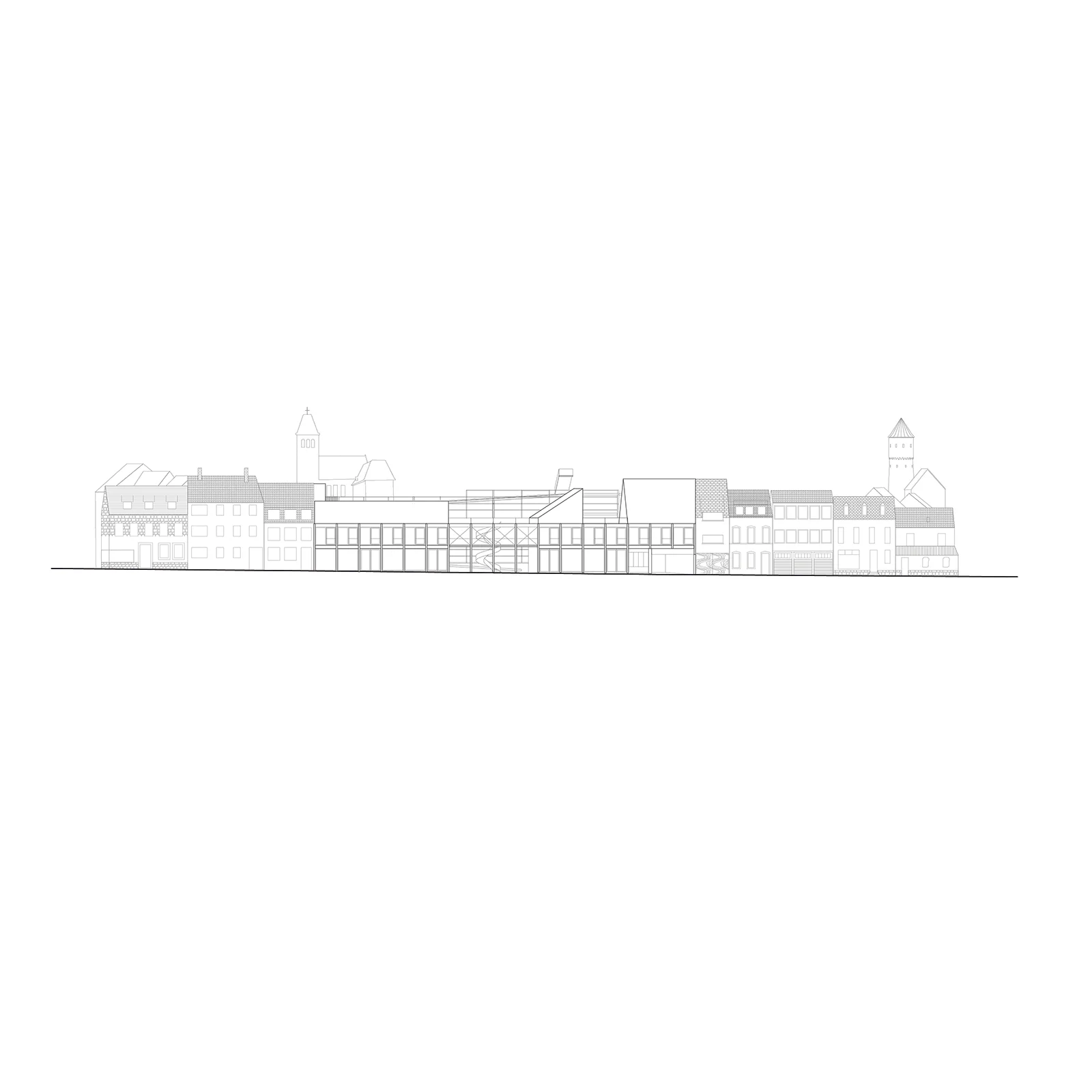
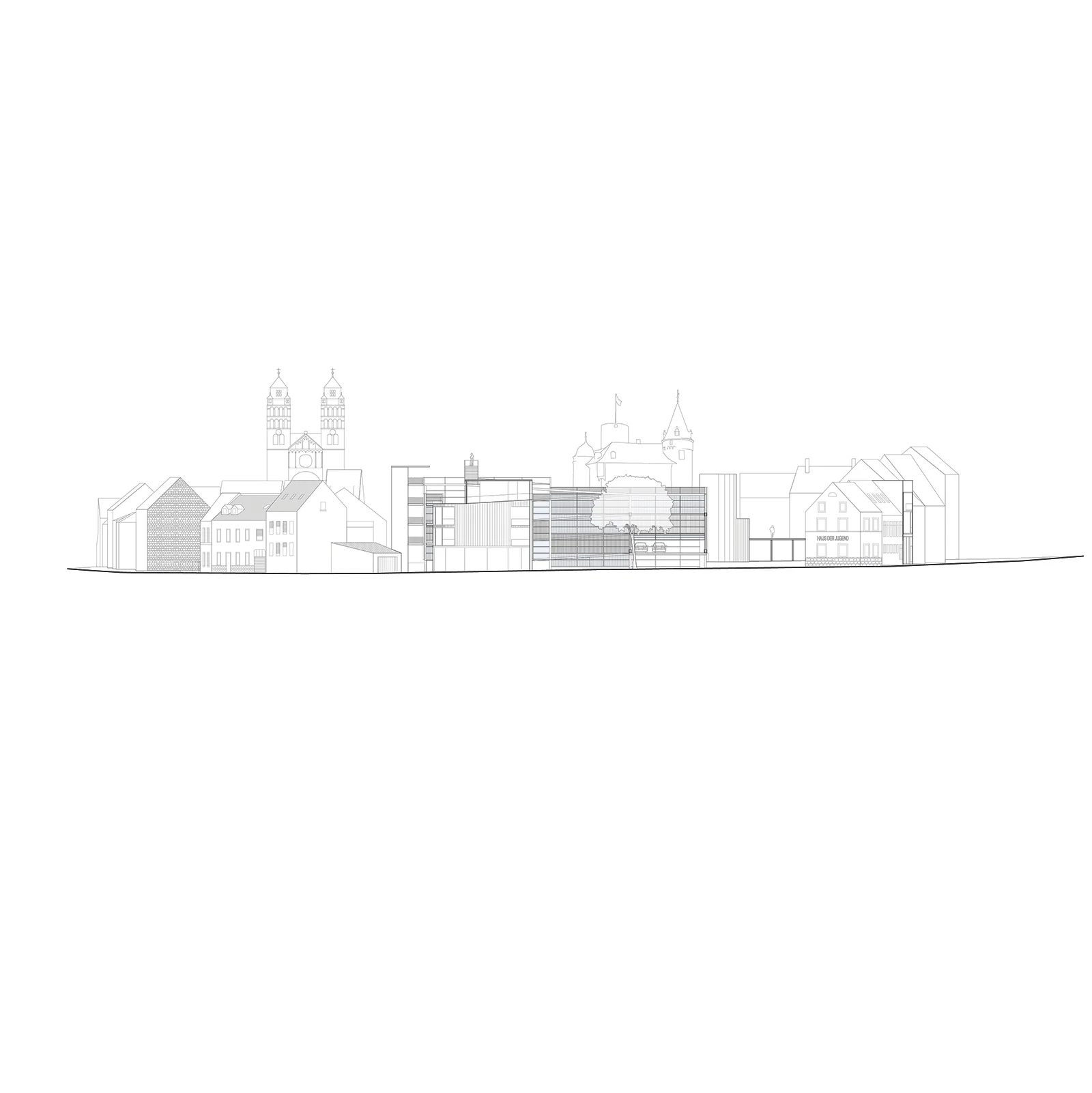
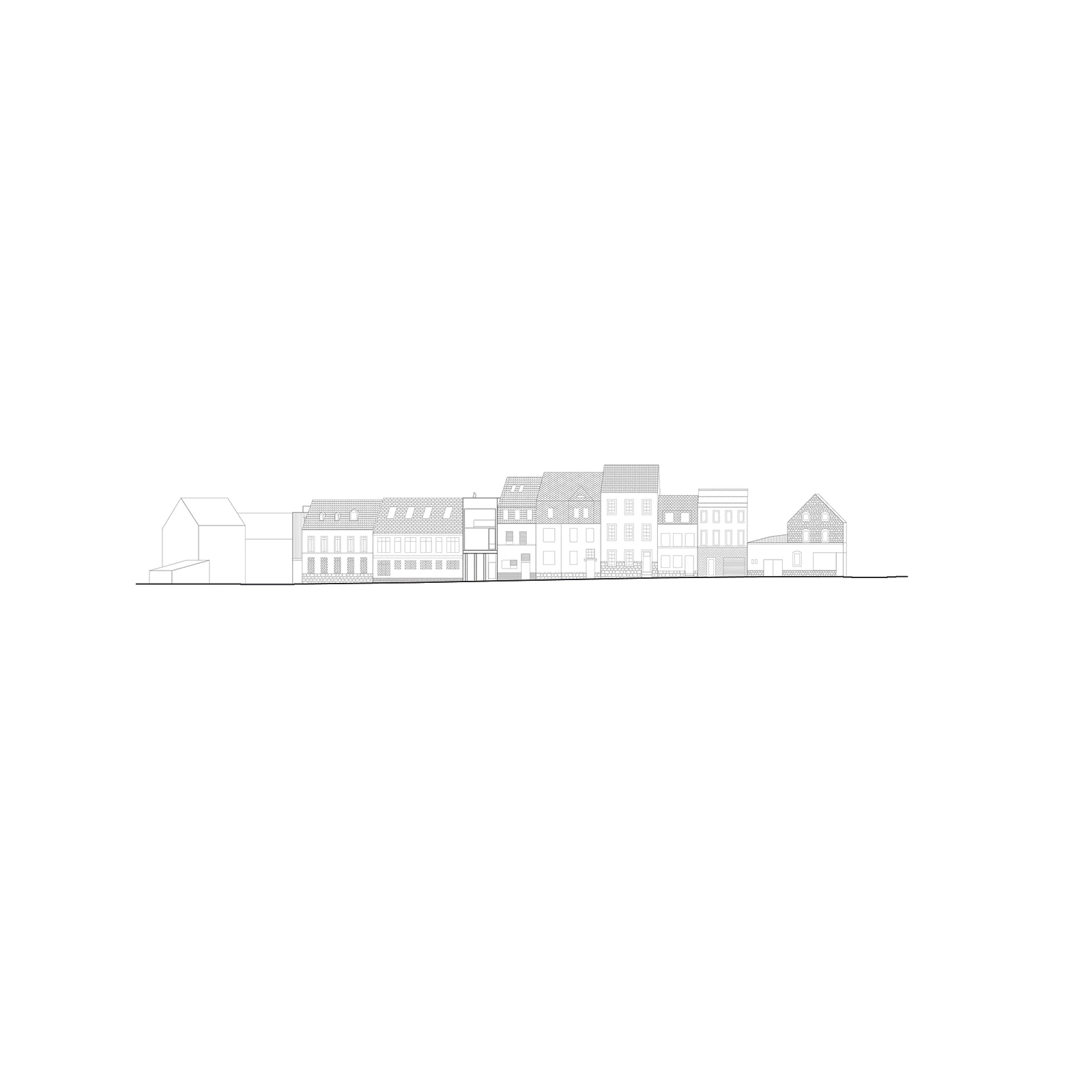
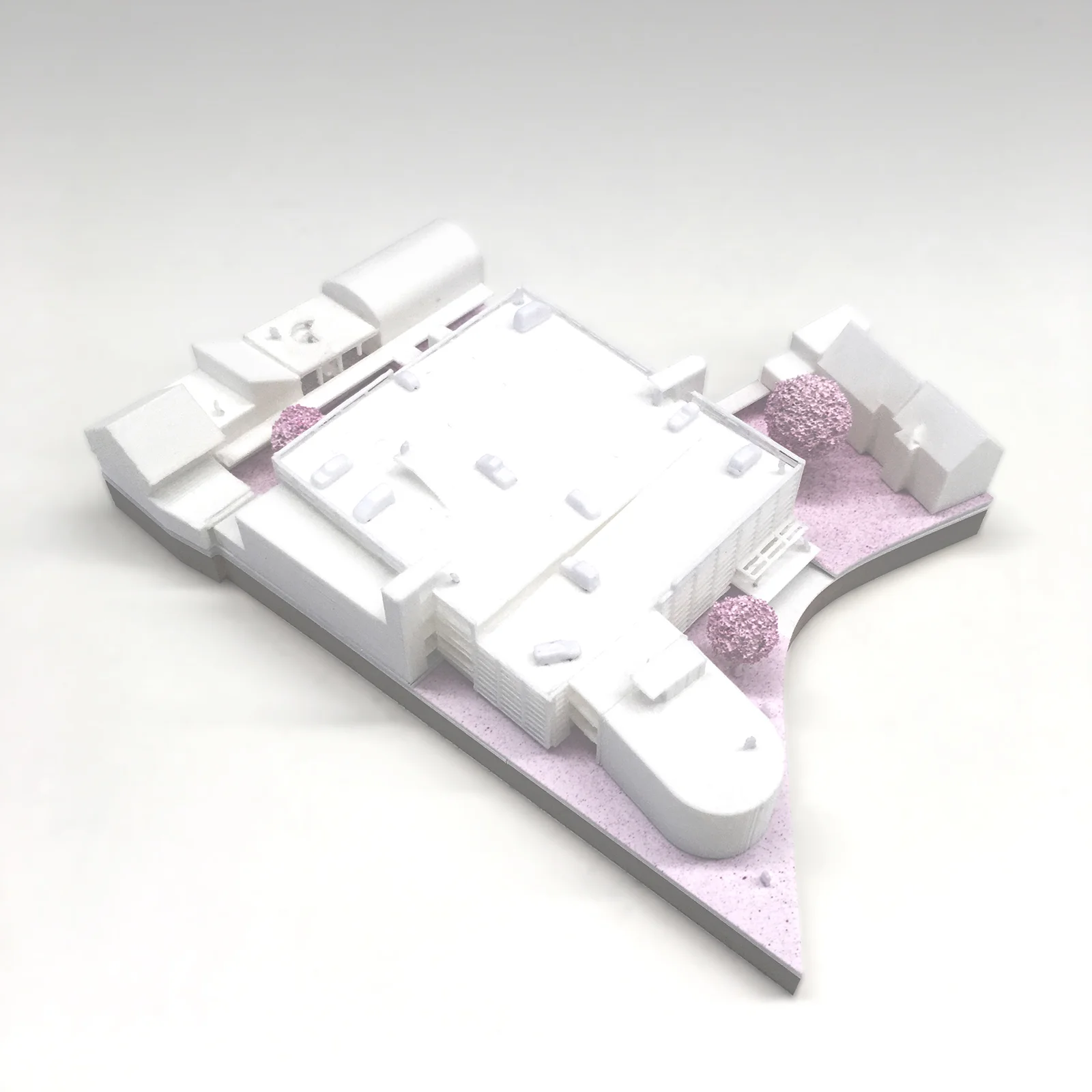
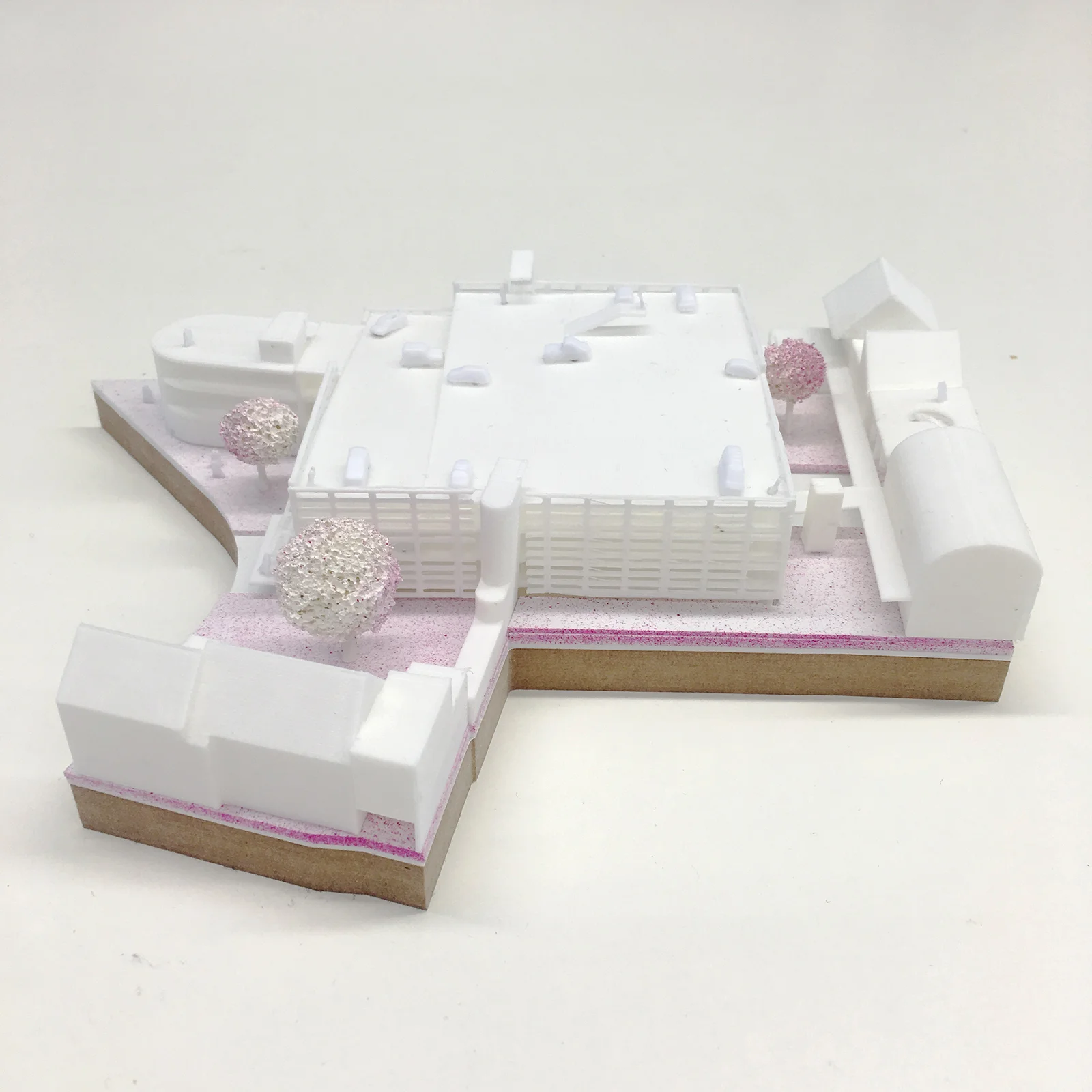
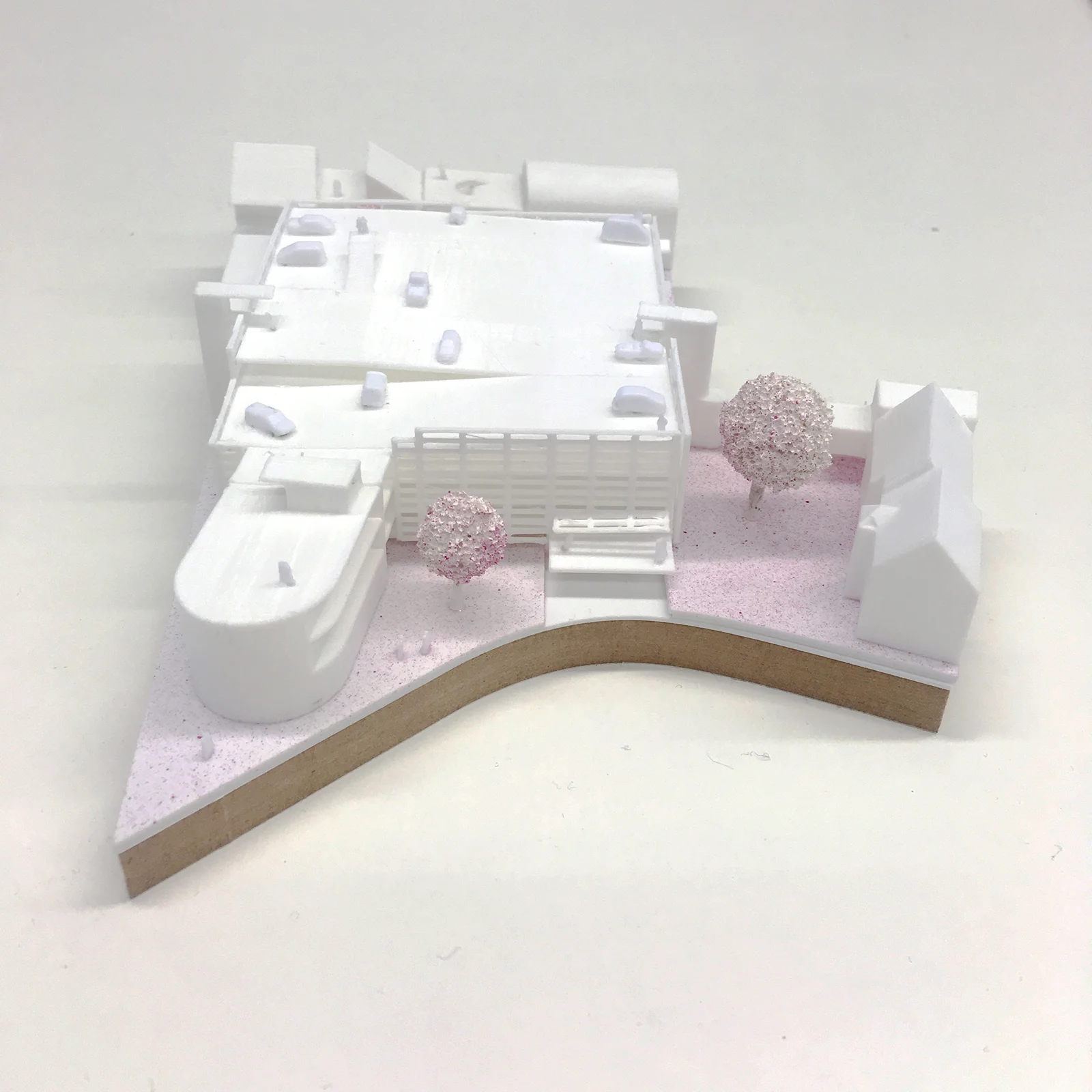
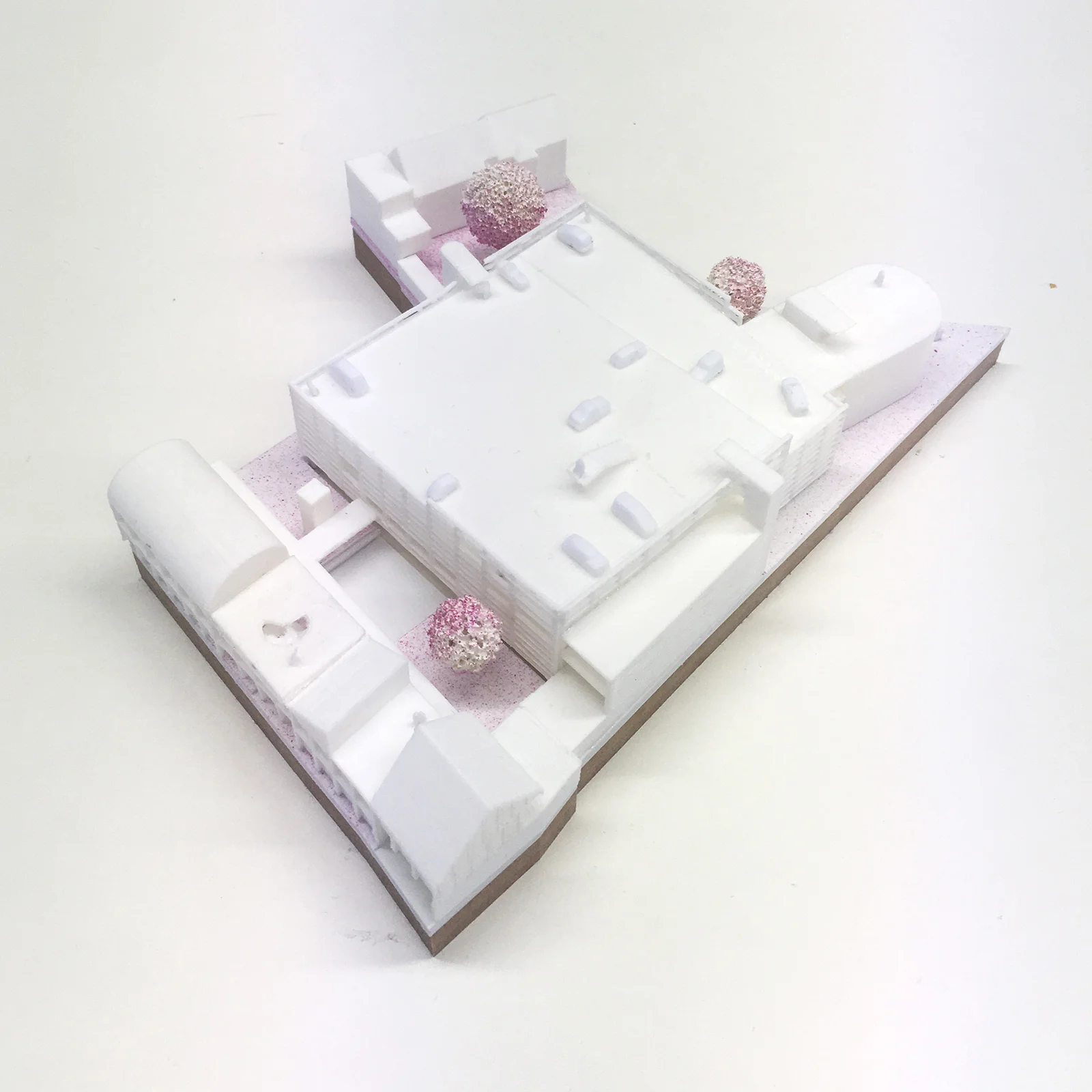
At the open competition for the Mayen (Germany) Old Town Parking Garage, we received a 3rd prize. The competition brief called for a collective garage in the center of the 14th-century medieval city, which plays both a tourist and commercial role. The site, where historic houses still stand and excavations reveal remains from Roman times, was offered in its entirety to fulfill the planned parking requirement.
Our approach, while critiquing the car-driven planning of the city's expansion—where cars should not dominate architectural design in the future—offered a proposal that works with the existing structures and historic remains.
The proposed parking space is concentrated into a compact square structure, hidden within the block and therefore shielded from the row of medieval houses. The entrances to the garage are designed not only for car drivers but also to accommodate tourists and local pedestrians.
The ramps of the garage are conceived as a route that leads visitors to the top floor to enjoy panoramic views. At the conceptualized junction where cars and pedestrians intersect, users can experience the exposure of the old ruins and the remnants of the medieval town, using the parking routine as an architectural tour of the city's heritage.
Bachelor (3rd Semester) Design Studio in Winter Semester 18-19
Institute for Architecture-Technical University in Berlin at Chair for Urban Design &
Urbanisation
Master's Final Review, Architectural University Dessau, for Prof. Ivan Kucina
Guest Critic at Master's Final Review, Architectural University Dessau
For Sam Chermayeff and Tobias König
Internship at the LIN architecture office in Berlin
Angers Berges de Maine, in Angers Rives Nouvelles – Trois regards, un grand projet pour Le Quai
Angers Grand Paris – Métropole douce – Propositions for the Post-Kyoto Metropolis
LIN Architects Berlin, Finn Geipel, Giulia Andi; ISBN 978-2-7010-1548-4